
Build Your Own Guitar
Craftsmanship, tranquility, and quality time in the master luthier workshop of Daniel Zucali
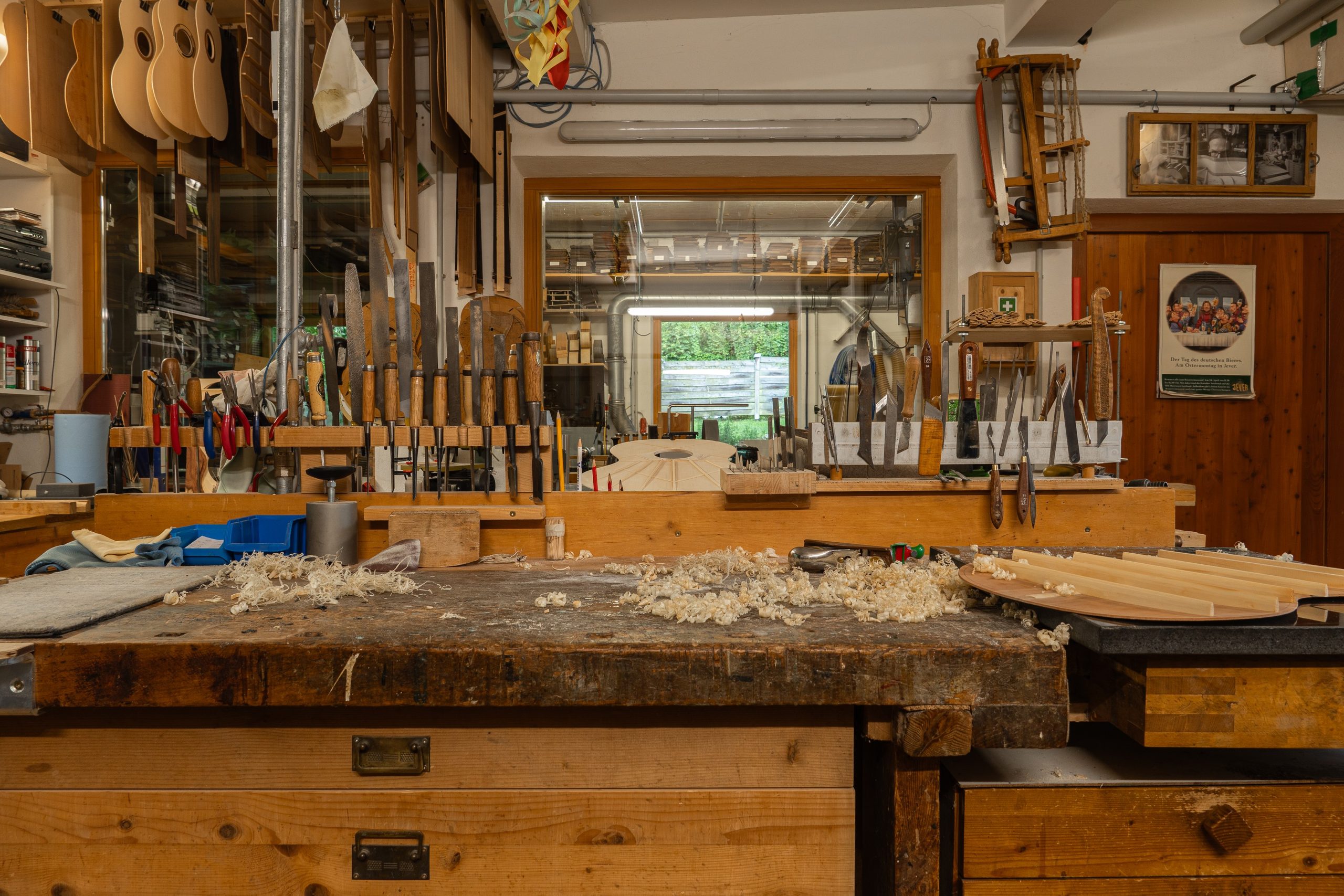
Do you want to not only own a new guitar, but also understand how it’s made? Immerse yourself in the fascinating world of guitar making, discover the unique characteristics of different tonewoods, and learn how construction, material selection, and handcrafted details make each instrument truly unique.
Join and actively shape the creation of your own guitar—from the very first piece of wood to the finished instrument, crafted entirely by your own hands.
I offer guitar-building courses under my personal guidance. As a master luthier with well over 30 years of professional experience, I will accompany you through every stage of building your own guitar—from the very first step to a fully playable instrument.
We do not use kits! From the very beginning, participants work directly on their own instrument and carry out every stage of the construction process by hand. Some components and machining operations are completed during the course in my machine workshop, including work on a CNC milling machine. However, all machinery is operated exclusively by me.
The Goal
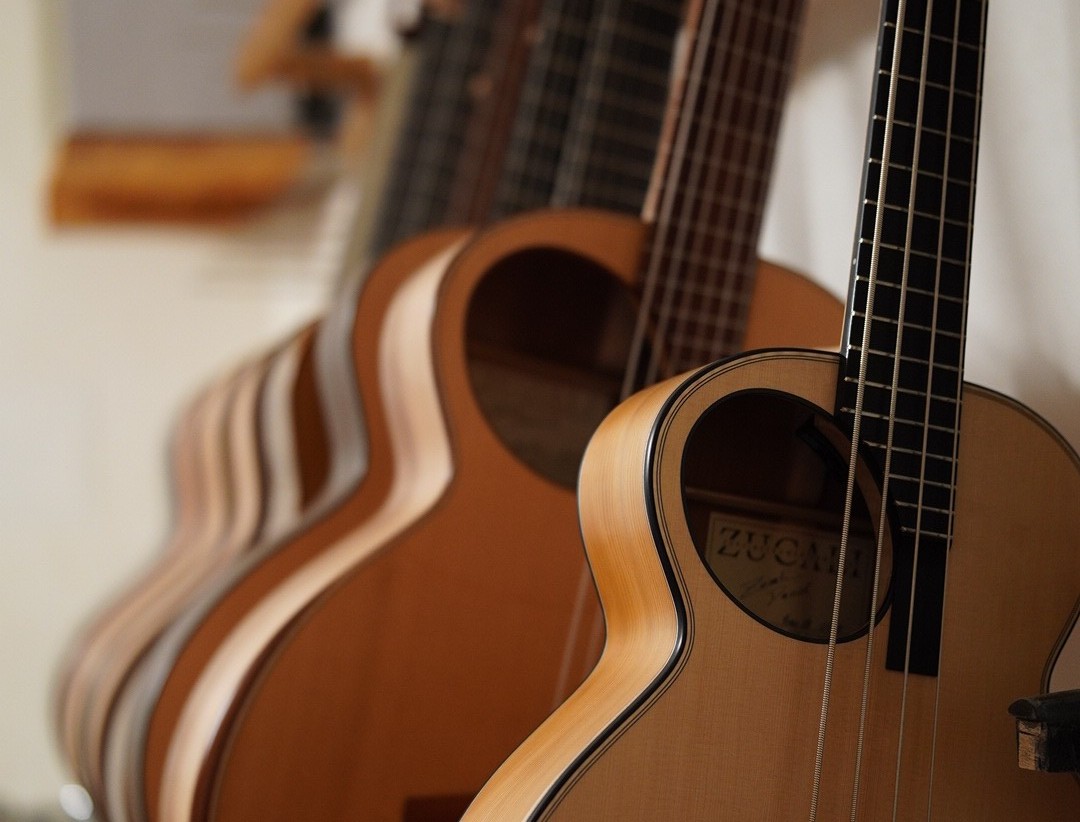
You will gain a deep understanding of guitar making, become familiar with both traditional and modern construction techniques, and experience how carefully selected tonewoods are transformed step by step into a musical instrument. By the end of the course, you will not only hold a guitar in your hands, but a one-of-a-kind instrument that you have built yourself.
A goal is a dream with a deadline.often attributed to Napoleon Hill (1883–1970)
The Course Concept
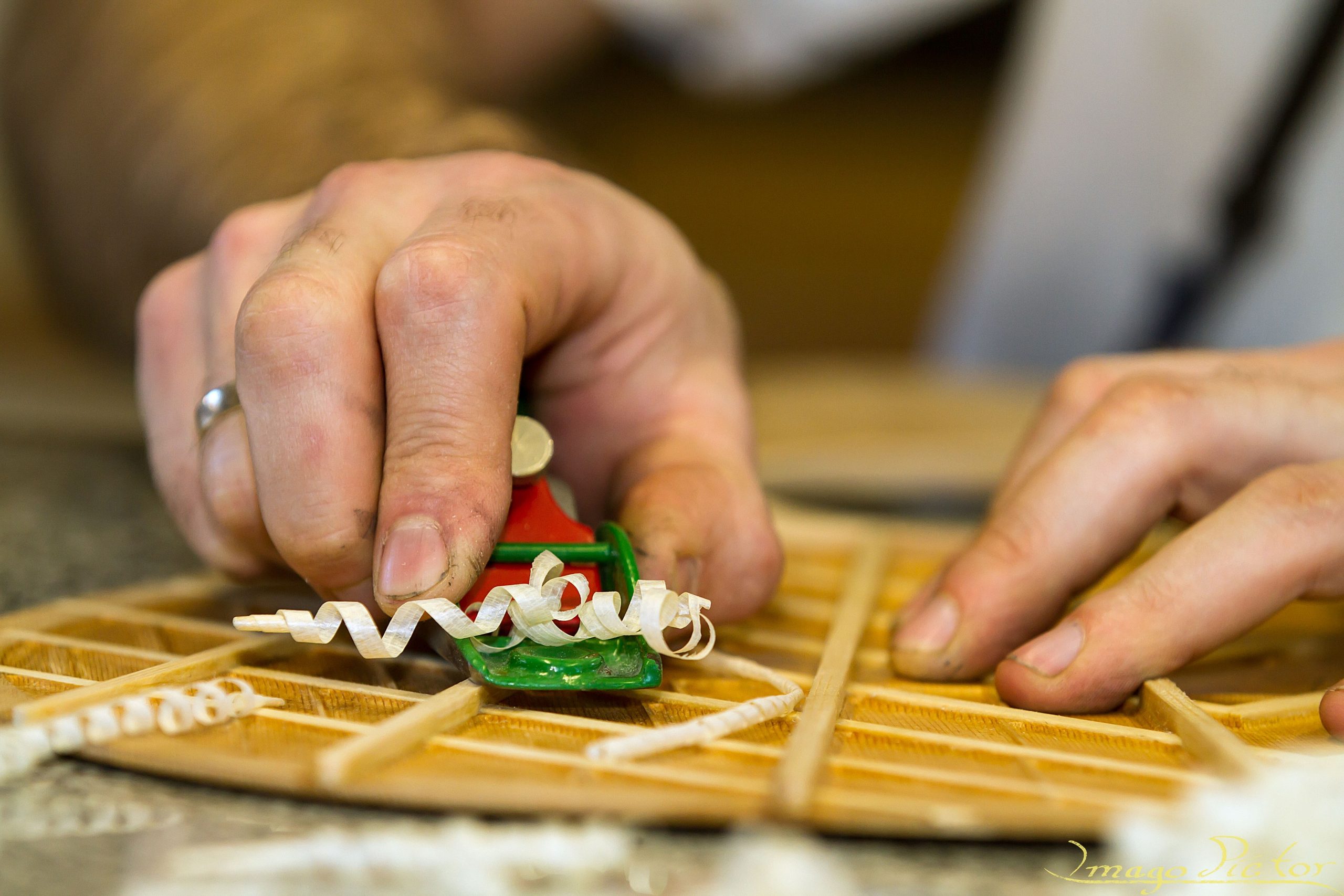
Instate of enrolling in one continuous program, you book individual course weeks, allowing you to work on your own guitar at your personal pace. Amost every step of the construction process is carried out by you, from the very first piece of wood, personally selected by you, to the completed instrument.
Building a guitar up to the finishing stage requires a minimum of three course weeks. This already represents an ambitious schedule and assumes steady progress throughout the course. Because surface finishing can vary greatly depending on the desired result, the finishing process is handled separately. It may be completed by me, by the participant, or—provided it does not slow down the course—as part of an additional course week.
Thanks to the small group sizes and individual instruction, you can join the course flexibly. You may take breaks between course weeks, continue at a later date, or complete certain work steps at home. If questions or challenges arise, online guidance is also available between course weeks on an hourly basis upon request.
Your Guitar
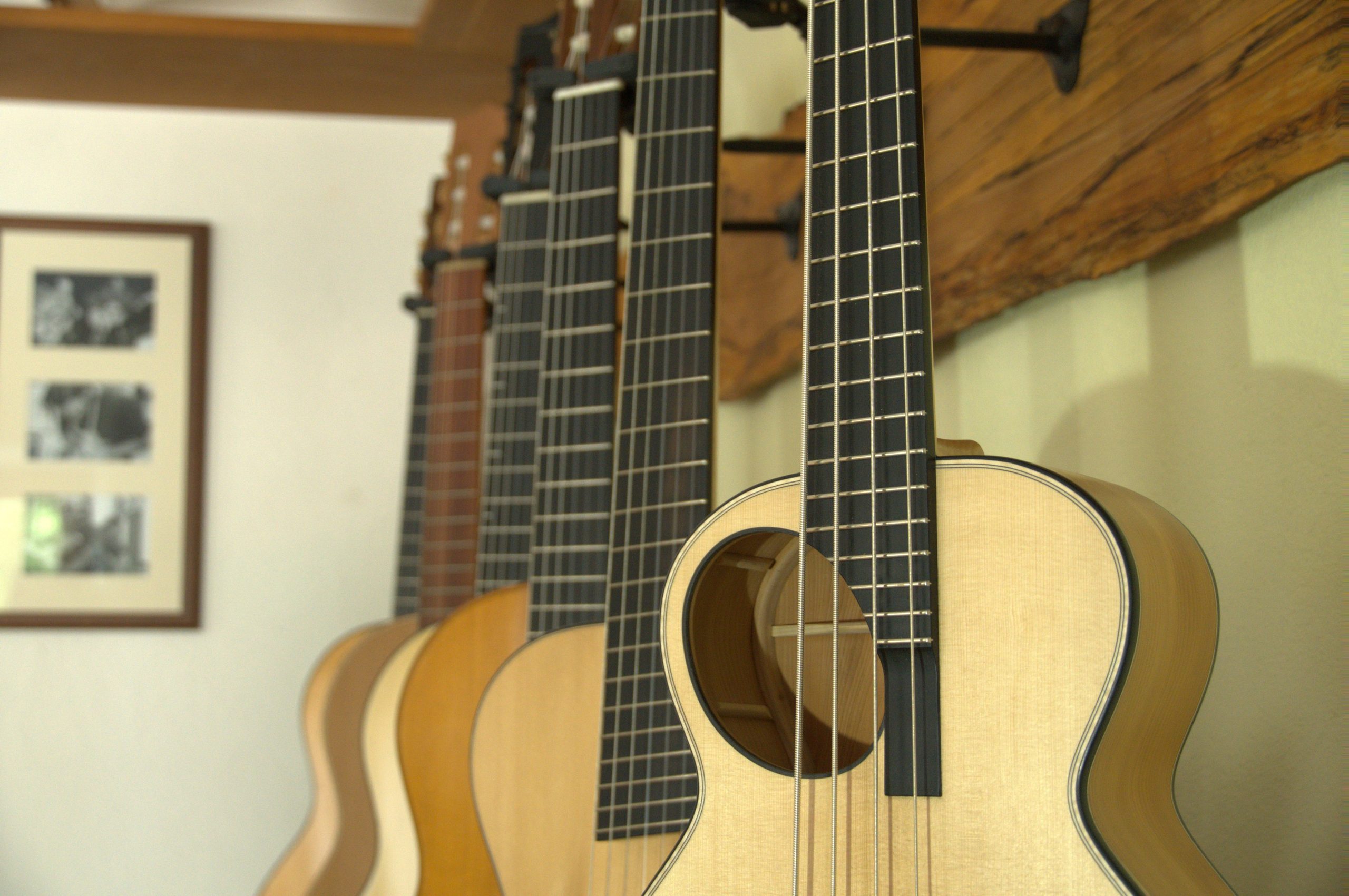
You will build one of my proven guitar models, all of which can be found on my website at www.zucali.at.
The construction and the fundamental dimensions of the instrument are predefined to ensure a high-quality guitar with a refined and well-balanced sound.
Within these parameters, you can personalize your instrument in a variety of ways, including:
- Headstock design
- Rosette
- Decorative details
- Choice of tonewoods and materials
- Scale length
- Fingerboard width and profile
Customization is possible as long as it can be completed within the course schedule and does not delay the progress of the other participants.
Please refer to the section “Custom Design Options” for more information.
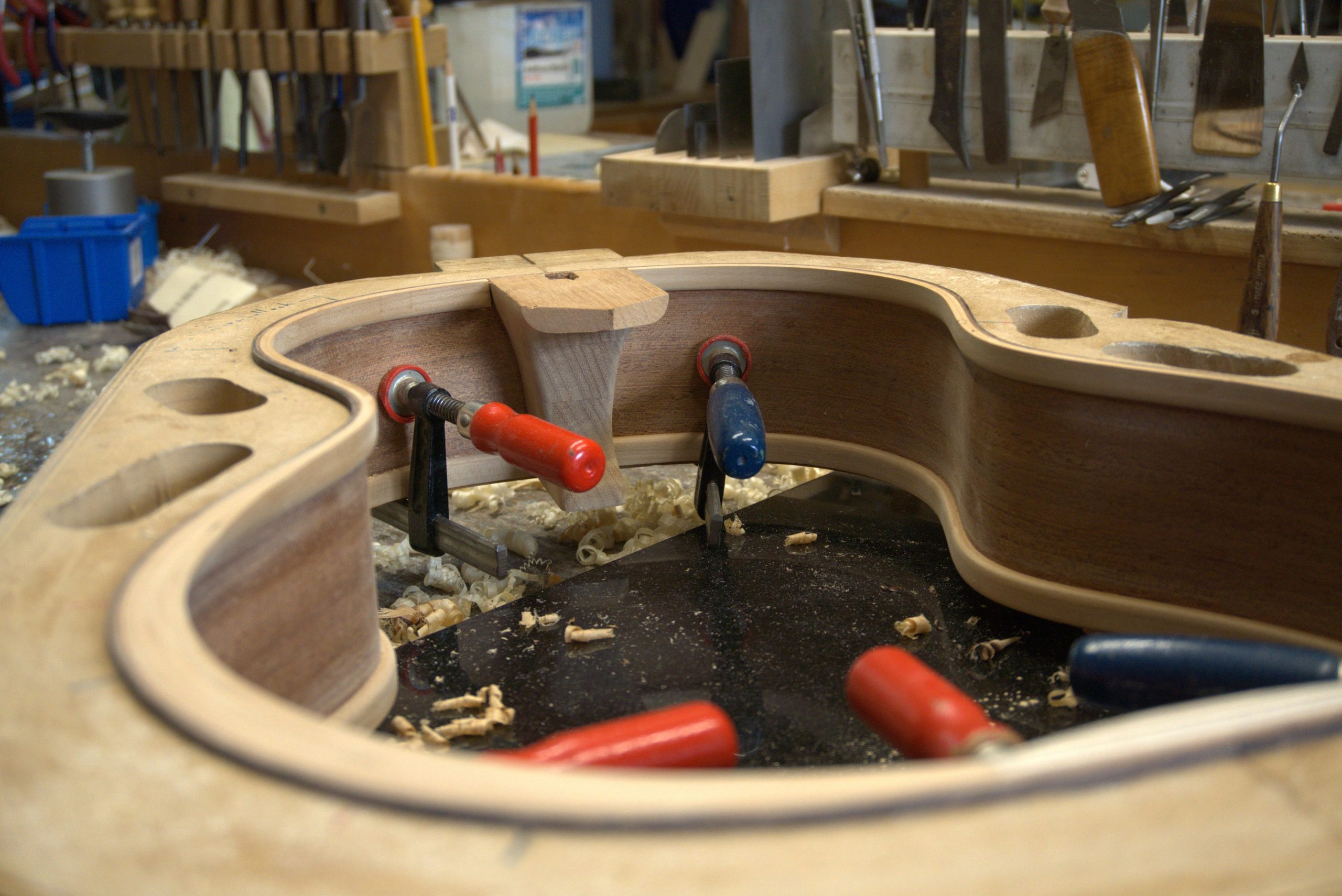
The Path to Your Finished Guitar
Information Sessions (Online)
Two online information sessions are held eight weeks and seven weeks before the course begins. These meetings provide an opportunity to answer any open questions and to estimate how many participants are likely to attend.
The dates will be announced to interested participants well in advance.
Preparatory Meeting (Online or On-Site)
A mandatory preparatory meeting takes place four weeks before the course begins.
Duration: approximately 3–4 hours
The following topics will be covered:
- Introduction of participants
- Guitar models
- Hardware and specification options
- Material selection
- Required tools
- Safety regulations
- Information about catering and accommodation options
- Liability waivers (also discussed again on-site)
- Questions and answers
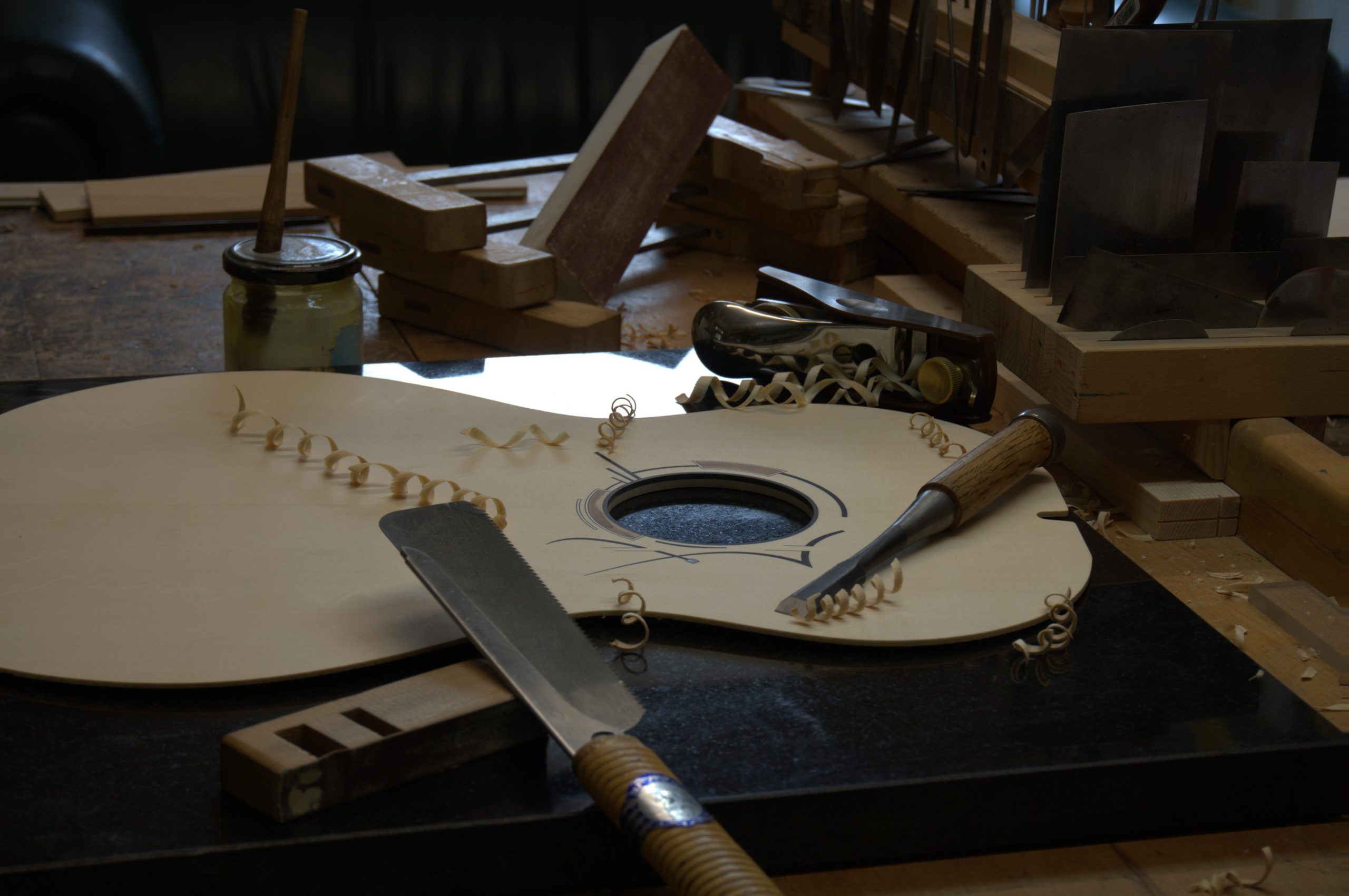
Nature hath made a thousand strange fellows.William Shakespeare (1564 – 1616)
Custom Design Options
Upon request, additional custom features can be incorporated, for example:
- Custom rosettes
- CNC-machined or hand-crafted inlays and decorative work
- Custom headstock ornamentation
If desired, I can complete these custom features outside the regular course hours on an hourly basis. The goal is to avoid delaying the progress of the course.
Tools
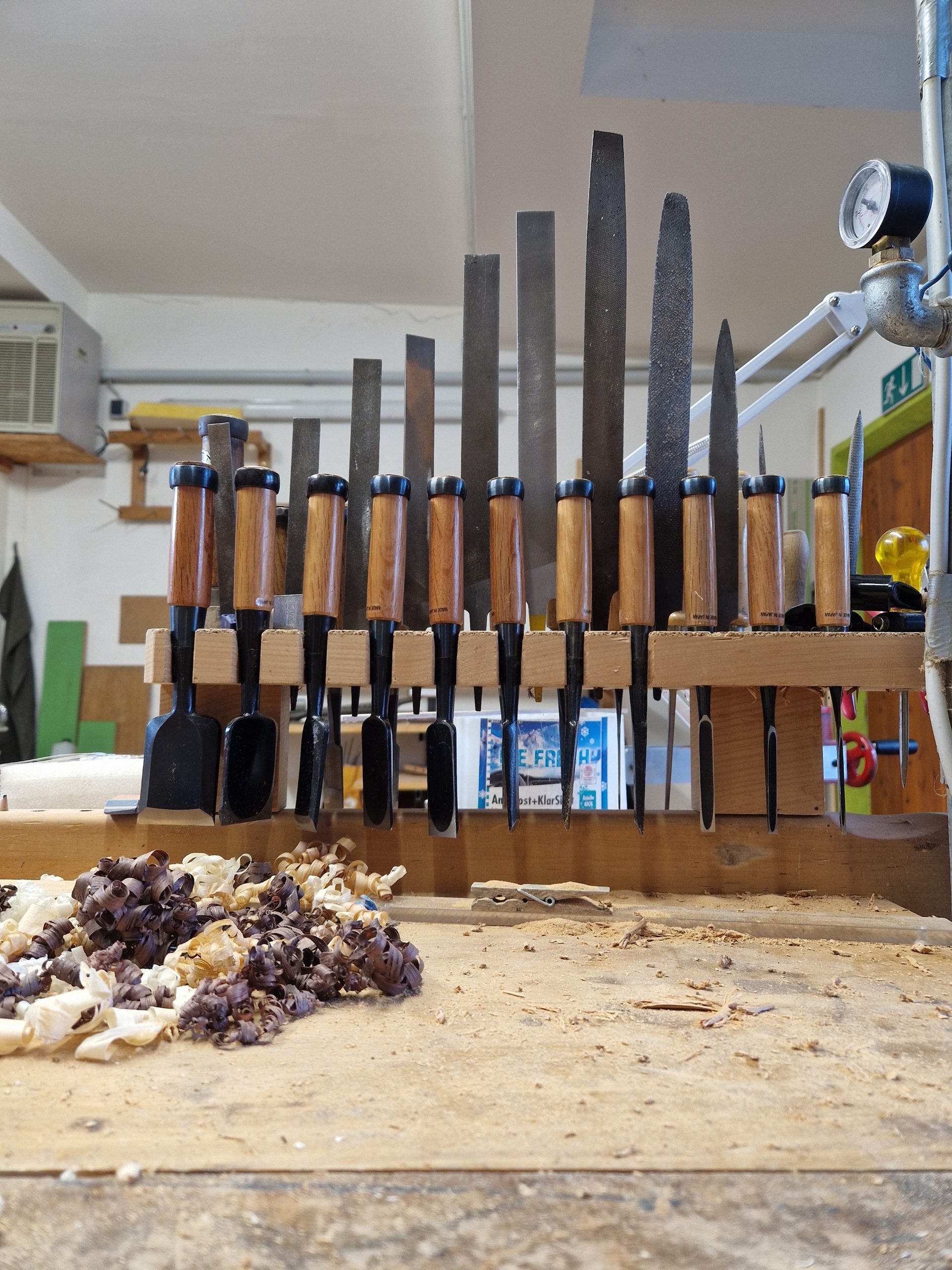
Ideally, each participant works with their own tools and brings them to every course.
Recommended tools include:
- Block plane and smoothing plane
- Set of bevel-edge chisels, e.g. 2 mm, 6 mm, 12 mm, 16 mm, 20 mm, 40 mm
- Double-bevel carving knife, e.g. Kiridashi Kogatana 21 mm
- Hand saws, e.g. short Ryoba and universal Kataba
- Cabinet rasp, e.g. 25 cm, cut No. 7
The Dieter Schmid Werkzeuge GmbH currently provides every course participant with a 15% discount voucher, valid for eight weeks (from four weeks before until four weeks after the course begins).
If necessary, these tools can also be rented from me.
In addition, a selection of specialized tools from my workshop is available for participants to use.
All machine work is carried out exclusively by me.
Materials
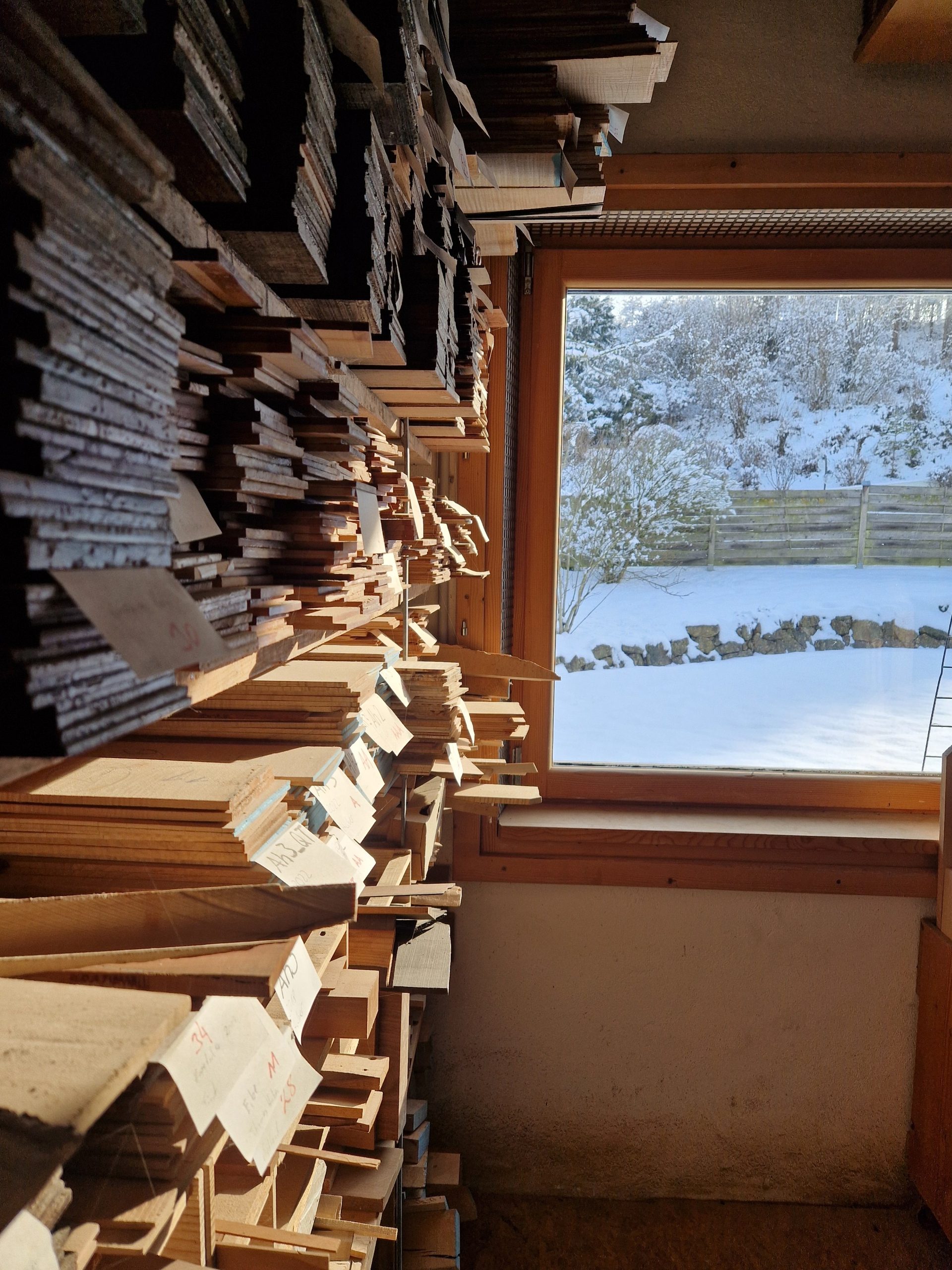
Material costs are not included in the course fee.
Participants may either:
- Purchase the required tonewoods and materials through me (prices available upon request), or
- Bring their own raw materials (pre-manufactured guitar kits are not permitted).
This approach allows each participant to customize their instrument while keeping material costs transparent and flexible.
Number of participants
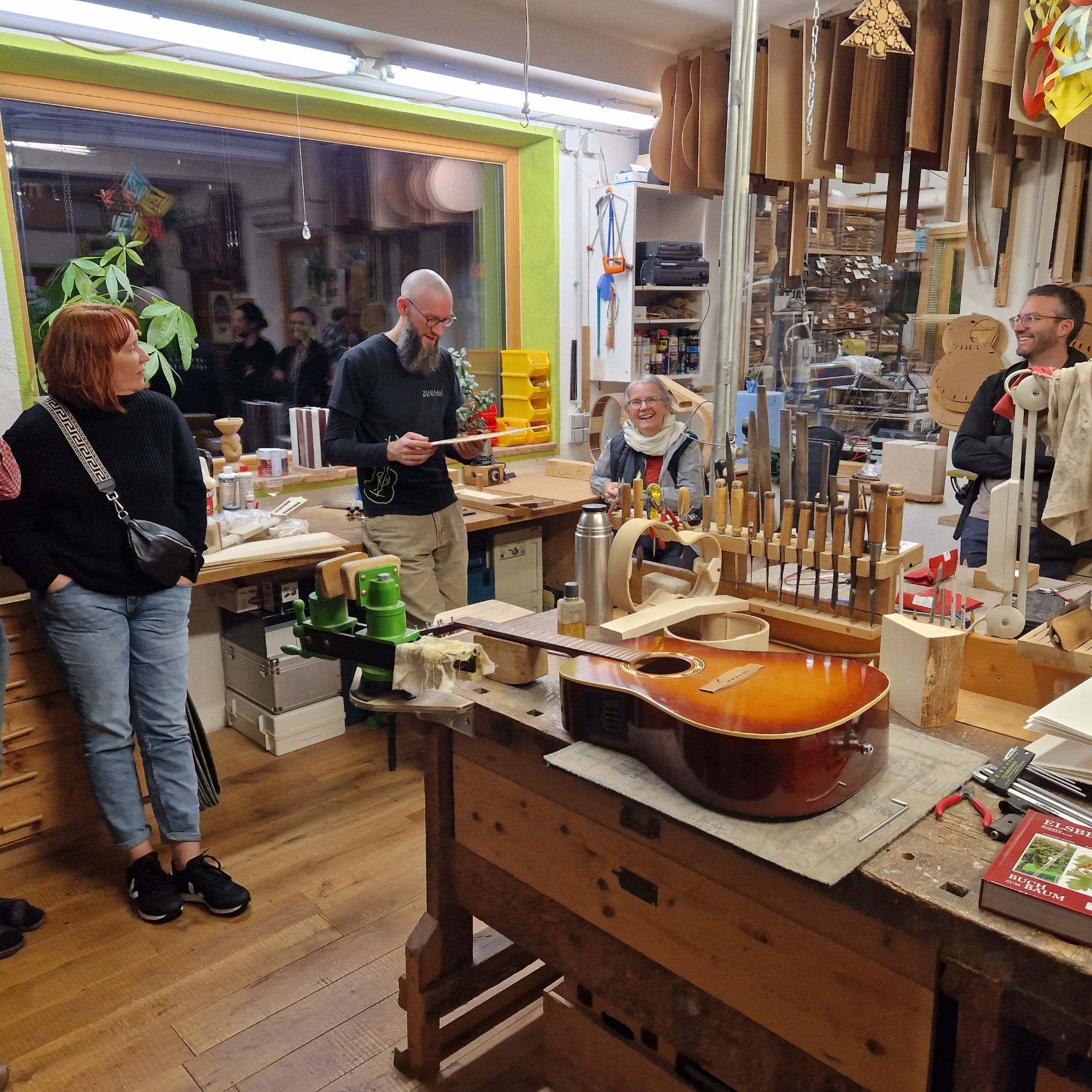
Each course is limited to a maximum of four participants.
This ensures that everyone receives sufficient individual guidance while still allowing ample time for focused, uninterrupted work.
The ornament of a house is the friends who frequent it.Ralph Waldo Emerson (1803-1882)
No one can accept reason who does not already possess it.Marie von Ebner-Eschenbach (1830-1916)
Requirments
- Minimum age of 18 years
- Ability to work independently
- Basic woodworking experience and manual skills

Course Fees
By the second online information session (seven weeks before the course begins), the number of participants will be confirmed. Course fees are then calculated as follows:
1 participant: €2,800 per course week (incl. 20% VAT)
(Individual course dates can also be arranged.)
2–4 participants: €1,450 per person, per course week (incl. 20% VAT)
Not included:
- Materials
- Accommodation
- Meals
- Optional custom work

Registration and Cancellation Policy
A sufficient number of participants must be registered no later than six weeks before the course begins for the course to take place.
Your place in the course is confirmed once payment has been received (approximately 6–7 weeks before the course begins).
Cancellation policy:
- Cancellation up to 21 days before the course begins: 50% refund
- Cancellation 20–14 days before the course begins: 25% refund
- Cancellation 13 days or less before the course begins: no refund
Mr. Christian Stadler can arrange cancellation insurance for you. If you are interested, please contact him at christian.stadler@wuestenrot.at or +43 664 4043224 for a quotation.
Spring Workshop: 8 March – 13 March 2027
Introductory Offer – 35% Discount! (at least two participants)
Summer Workshop: 31 May – 5 June 2027
Introductory Offer – 20% Discount! (at least two participants)
Autumn Workshop: 18 October – 23 October 2027
(at least two participants)
Course Schedule
Monday to Friday: 8:00 a.m. – 5:00 p.m. (including a 1-hour lunch break)
Saturday: 8:00 a.m. – 2:00 p.m.
I will be available throughout these hours to provide guidance and support.

Course start
At the beginning of the course, all tools should be sharpened and ready for use so that the available time can be devoted entirely to guitar building.
On Monday morning, we begin with a welcome session and an informal coffee gathering. Afterwards, we start working and immerse ourselves in the daily life of the workshop.
Major Stages of Guitar Construction
- Building the neck
- Constructing the sides (rim assembly)
- Preparing the soundboard and back
- Assembling and closing the body
- Installing bindings and purfling
- Making the fingerboard
- Building the bridge
- Gluing the fingerboard to the neck
- Final shaping of the neck
- Fret installation
- Sanding and surface preparation
- Preparing for finishing / applying the finish
- Gluing the bridge to the soundboard
- Final assembly and setup
Depending on your progress, these stages may be distributed across multiple course weeks.
The ornament of a house is the friends who frequent it.Ralph Waldo Emerson (1803-1882
Accommodation and Meals
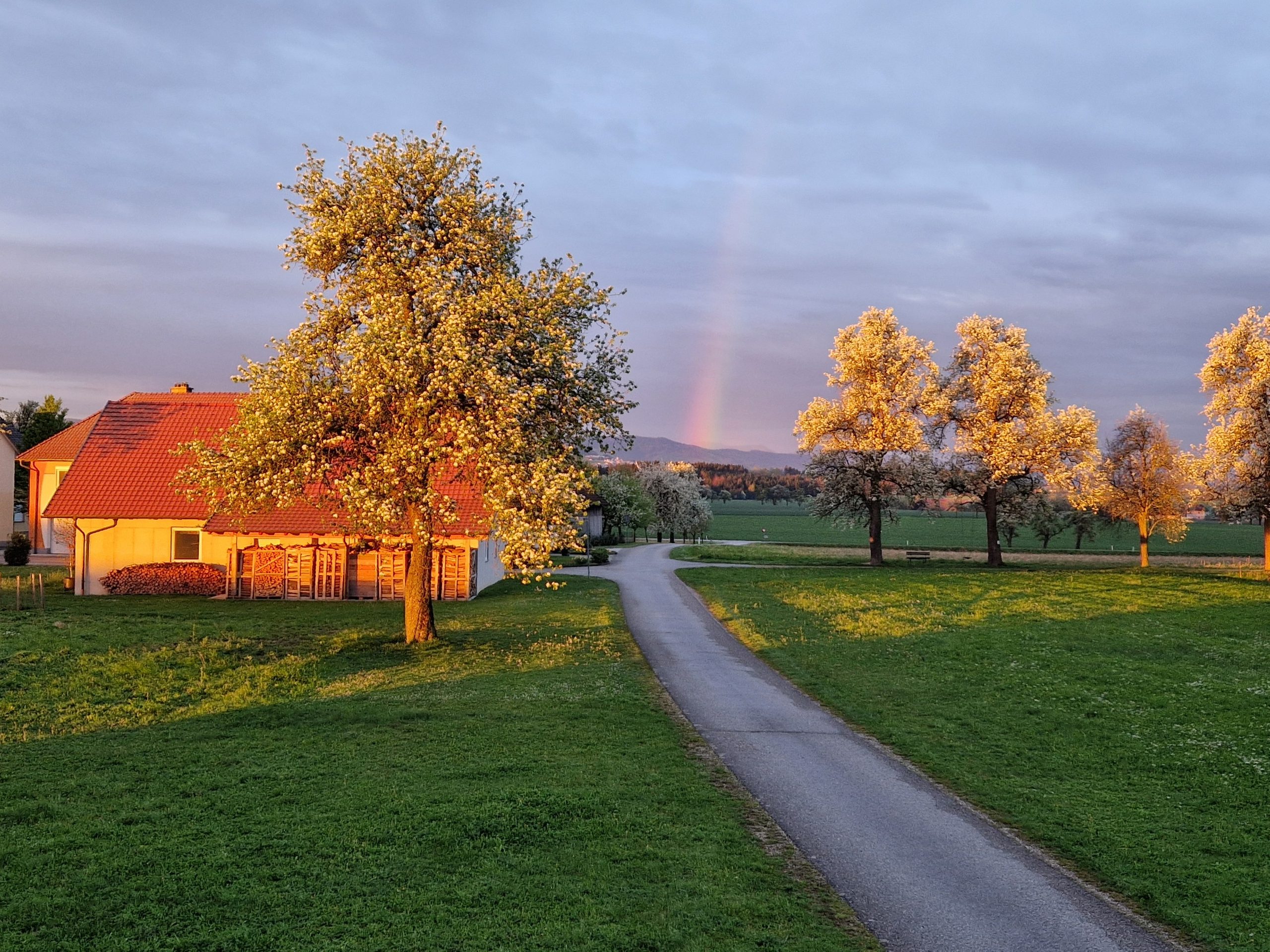
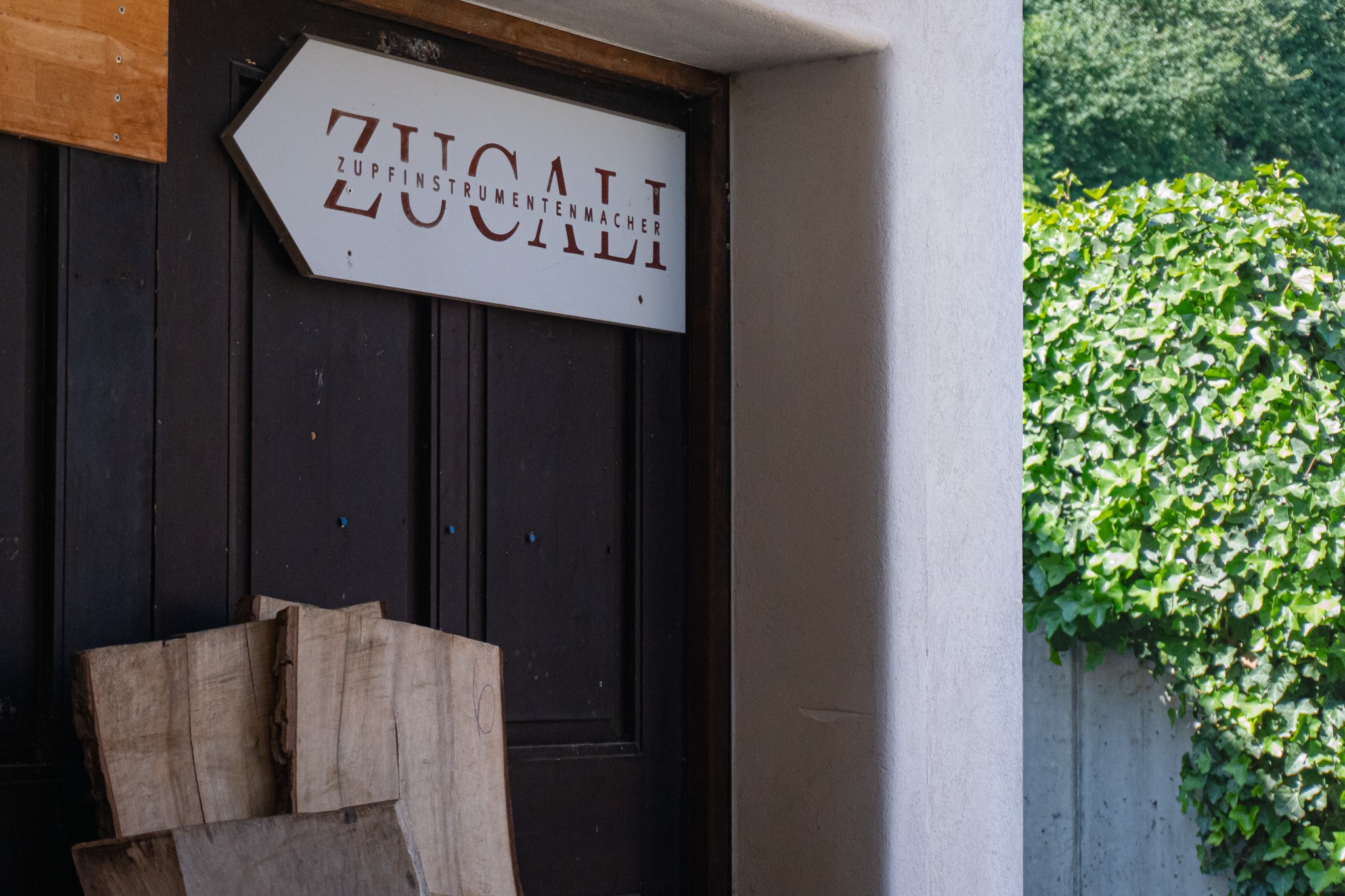
The course takes place in my workshop in Stadt Haag, Lower Austria.
Nearby you will find:
- Traditional inns with guest rooms
- Guesthouses
In addition, there is a campground approximately 1.5 km from the workshop.
Arrival and departure
My workshop is easily accessible by both car and train.
From the railway station, the workshop can be reached on foot in approximately 10 minutes.
Traveler, there is no path. The path is made by walking.Antonio Machado (1875–1939)