Repairs / Restorations
Repairs and maintenance are an important part of my work.
Many musicians underestimate the value of a professionally serviced guitar. After just a few hours of careful work, many “worn-out” instruments come back to life.
Restorations of old guitars are less common, but all the more fascinating. In restoration work, preserving the original substance is always the top priority.
He who treads softly goes farChinese proverb
Lucien Gélas
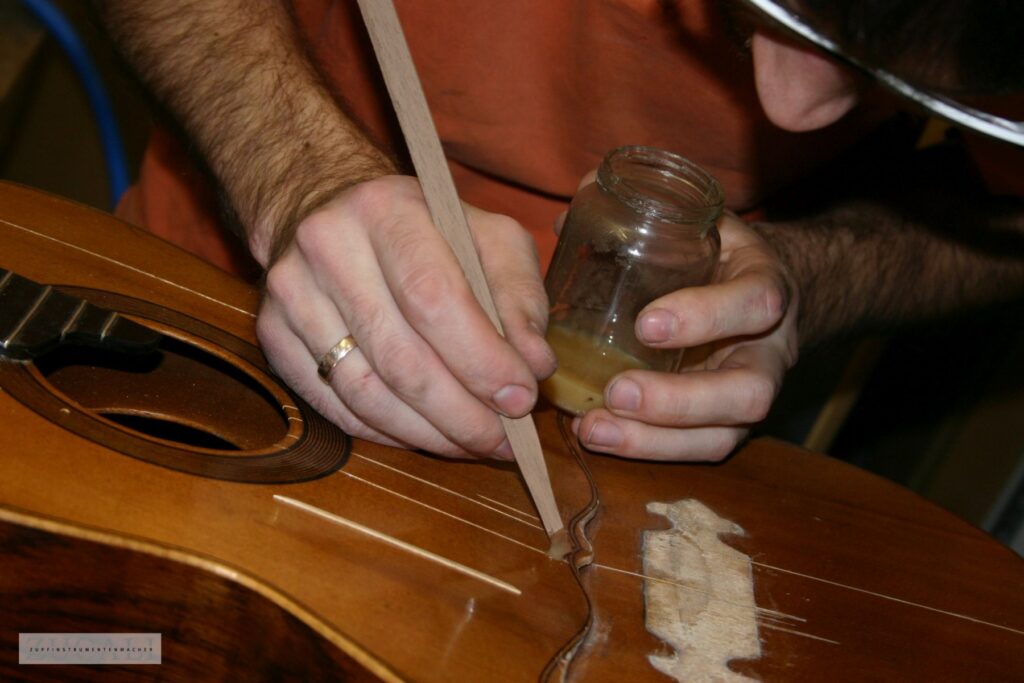
This guitar by Lucien Gélas was in very poor condition. Since it was meant to be made playable again for musical use, a compromise between restoration and repair was necessary. That means I preserved as much of the original as possible, while still needing to replace some parts.
Lucien Gélas was born on January 15, 1873, in Menton, Alpes-Maritimes. He was a guitarist and teacher who developed, patented, and produced the concept of the so-called “double-resonance guitar.” The Munich-based guitarist Heinrich Albert (1870–1950) was so convinced by these instruments that he recommended them to his students. The most well-known among them were Luise Walker (1910–1998) and Bruno Henze (1900–1978).








Reisinger
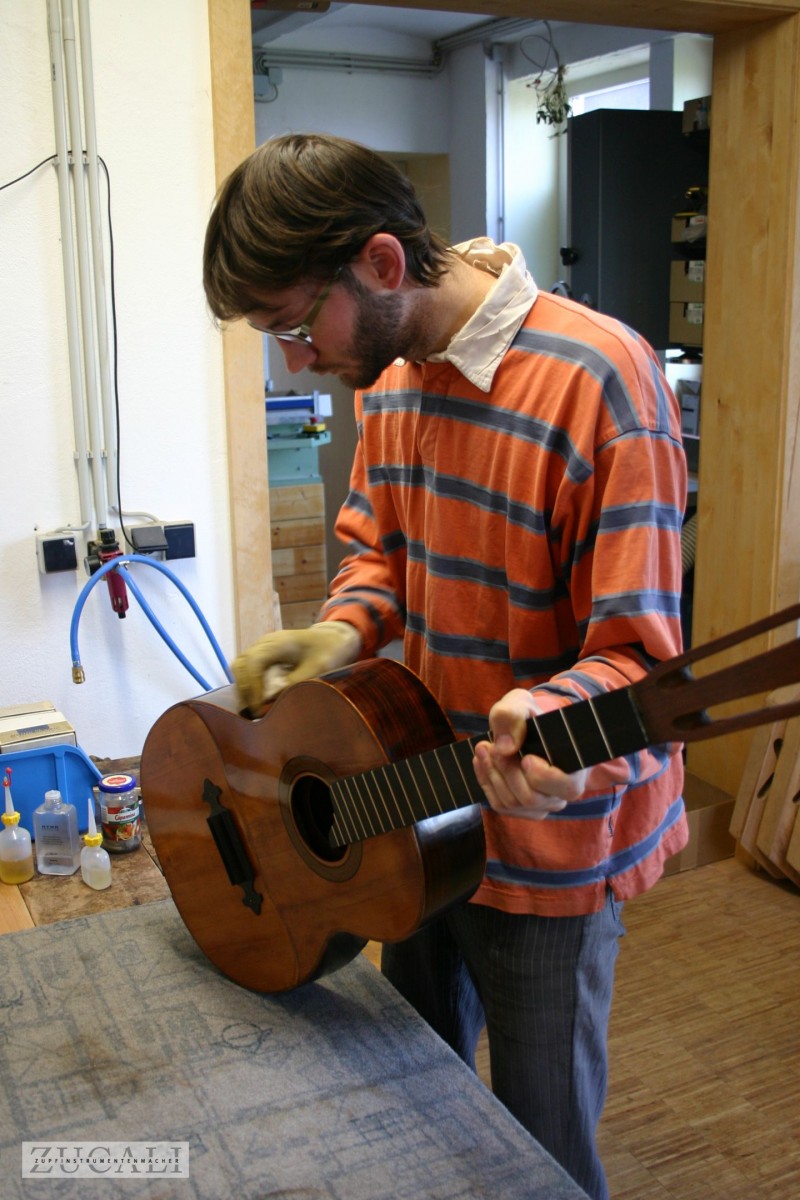
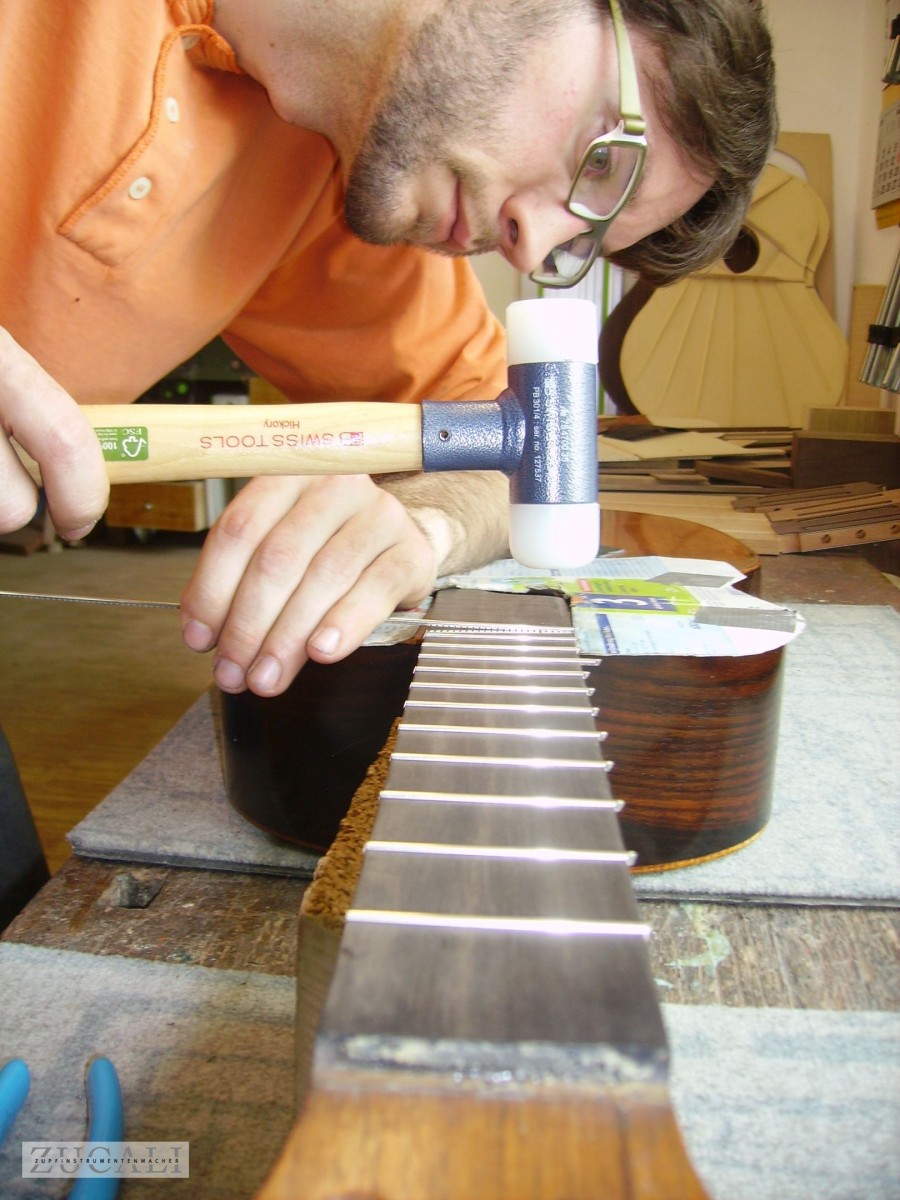
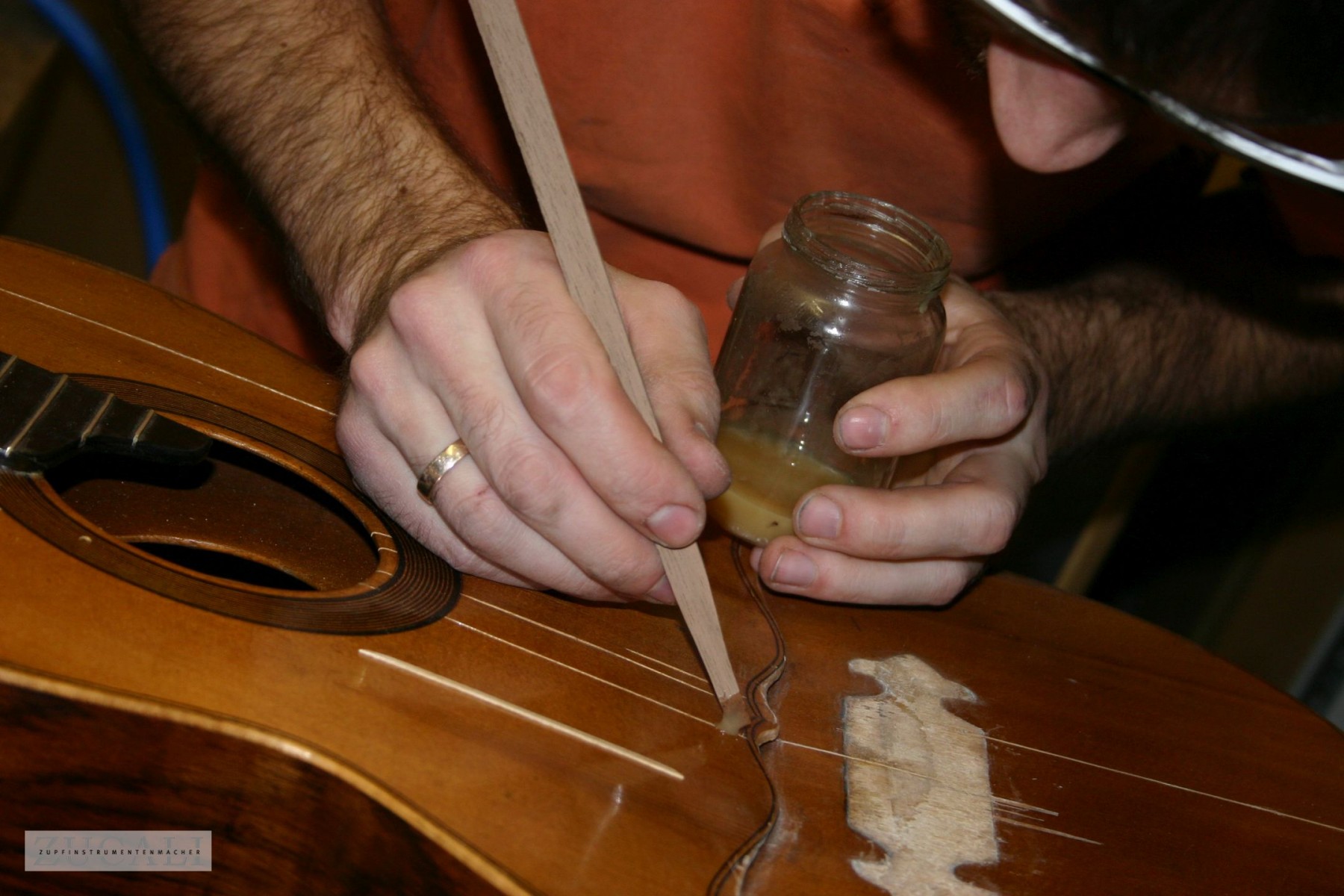
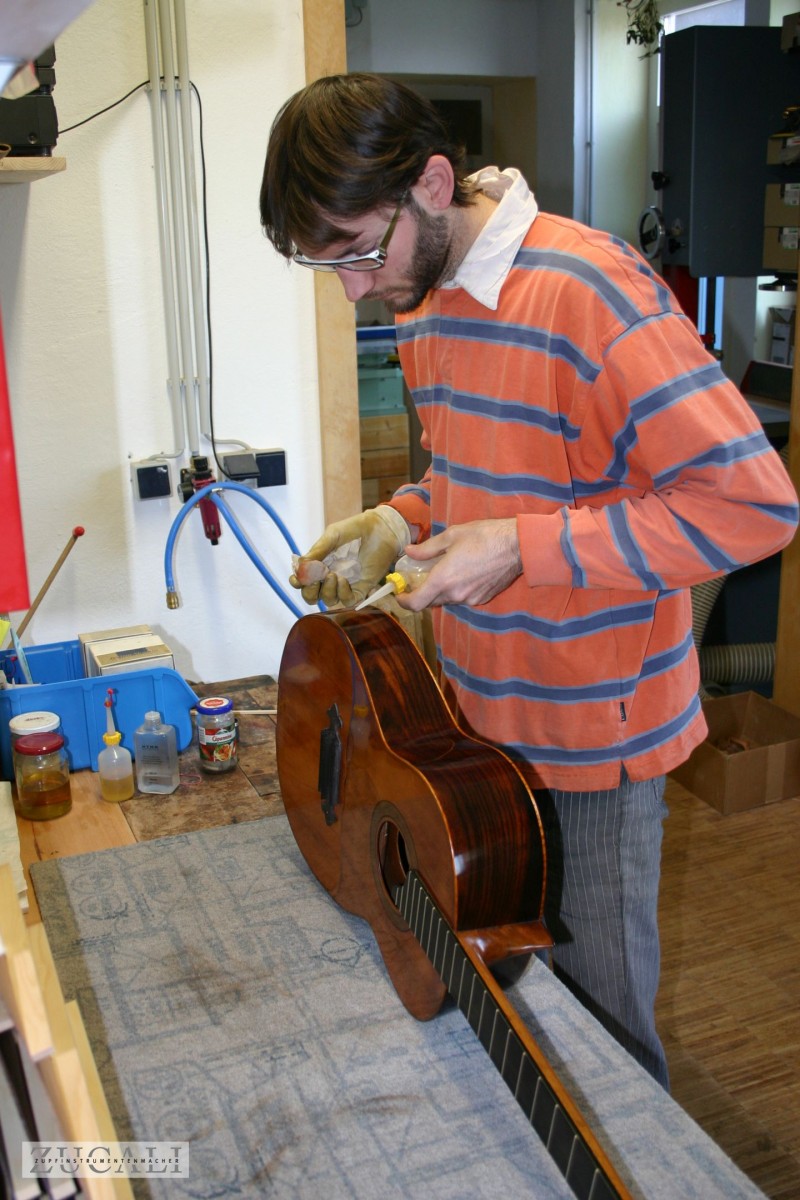
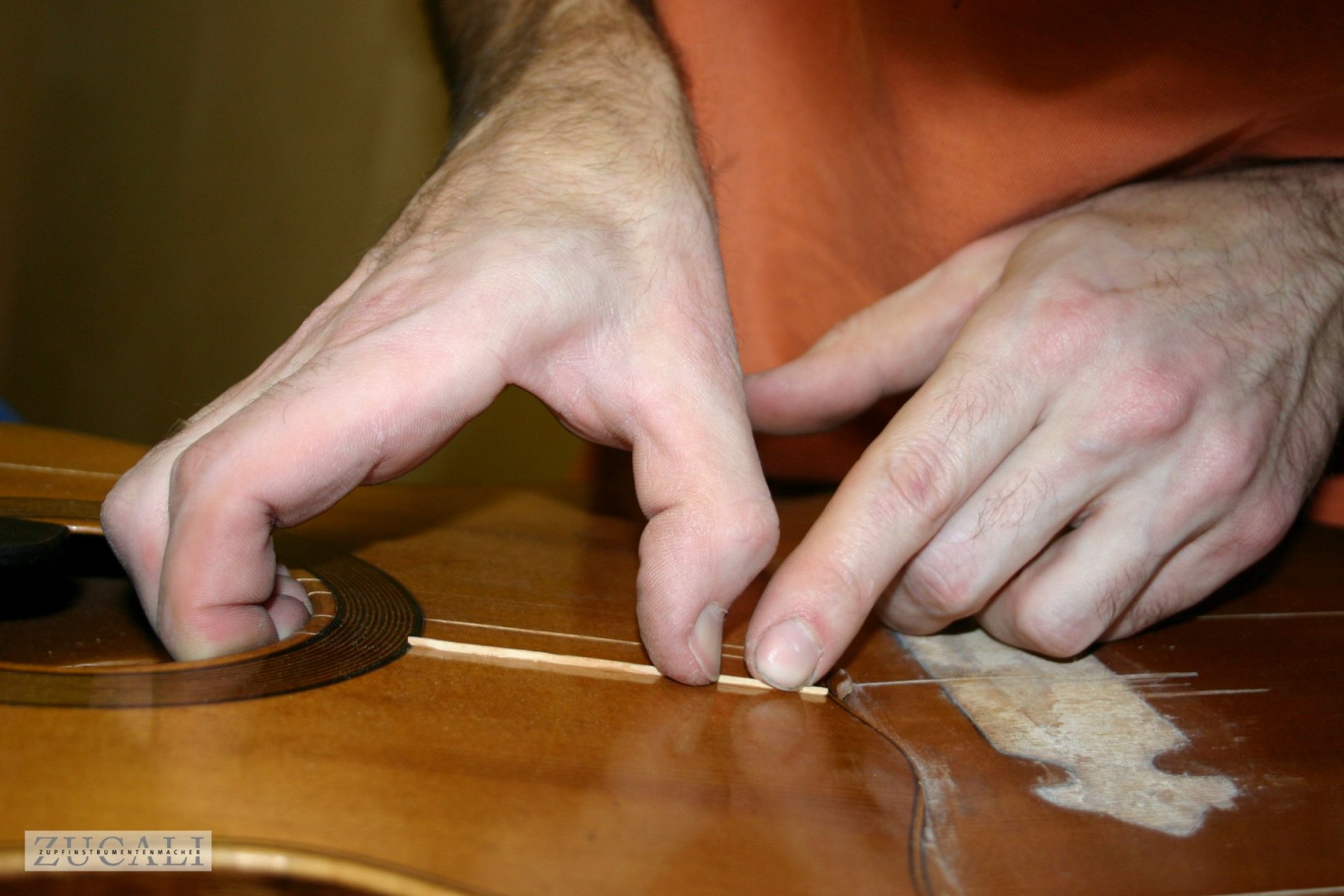
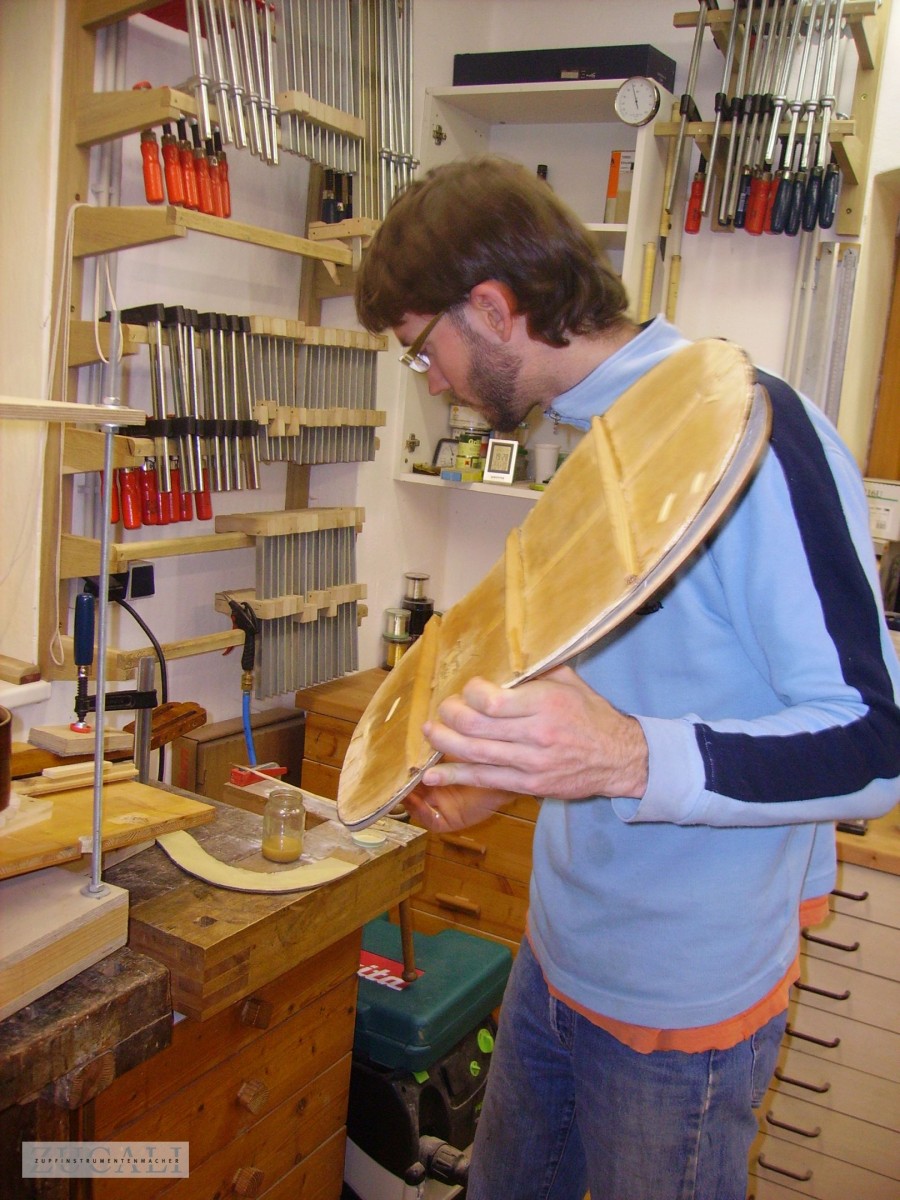
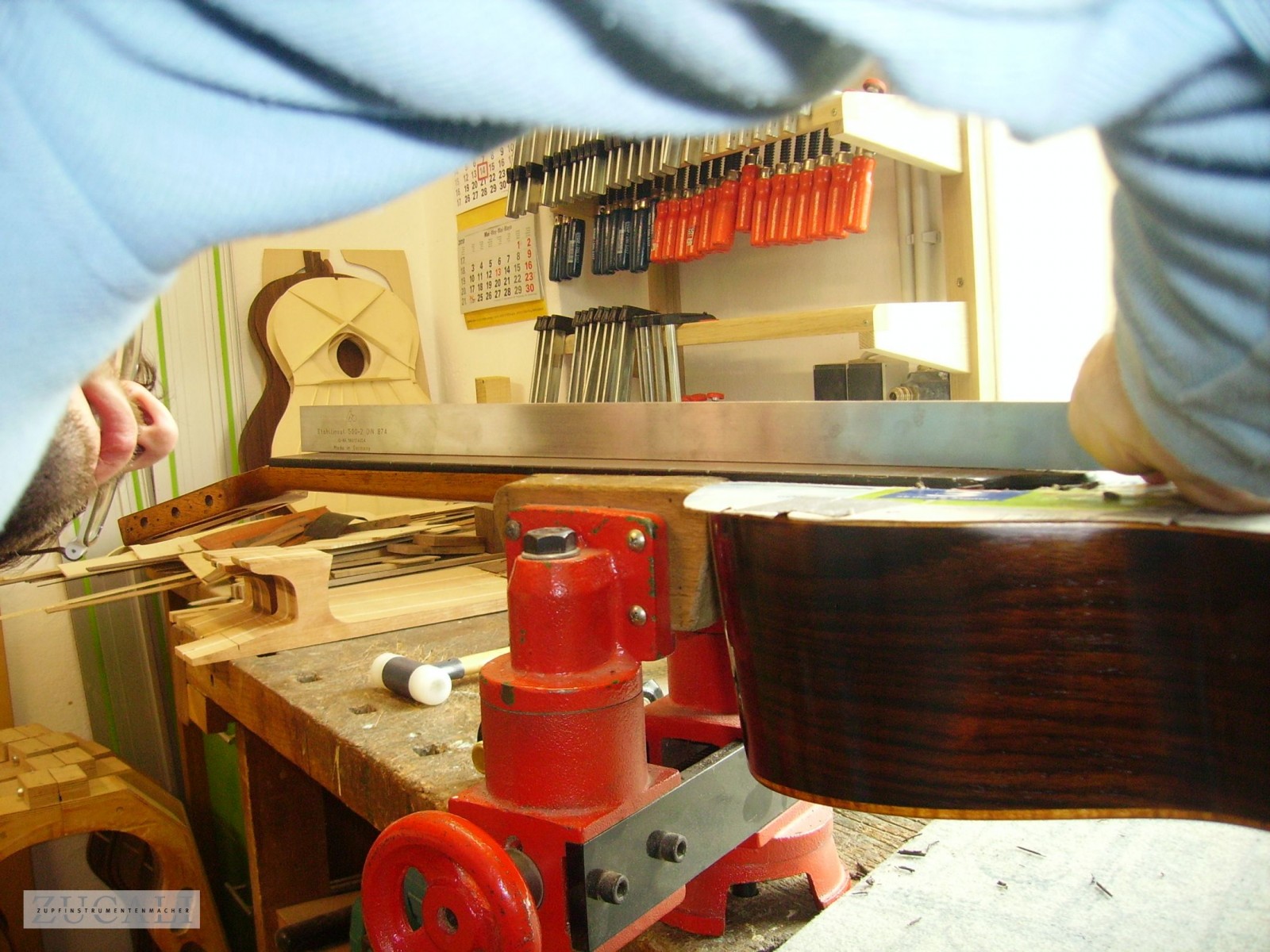
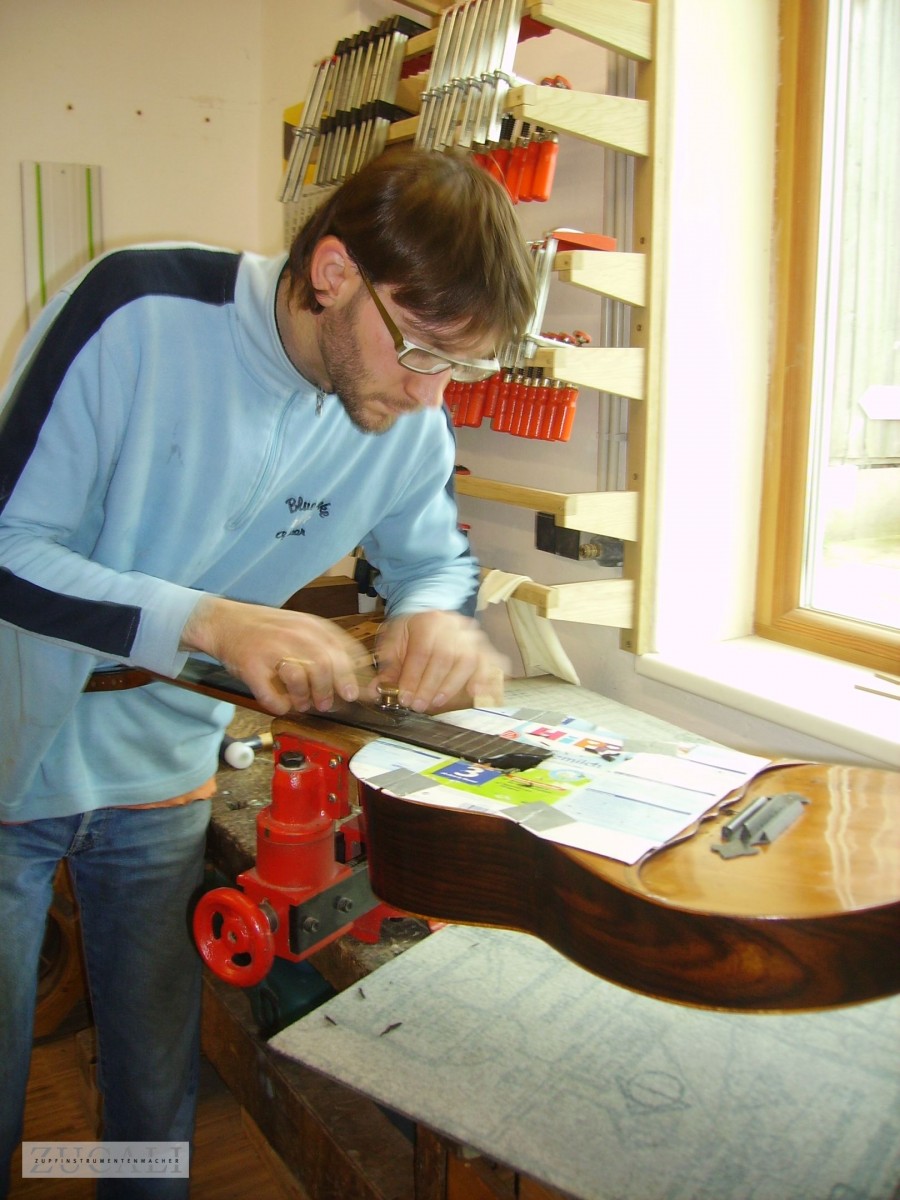
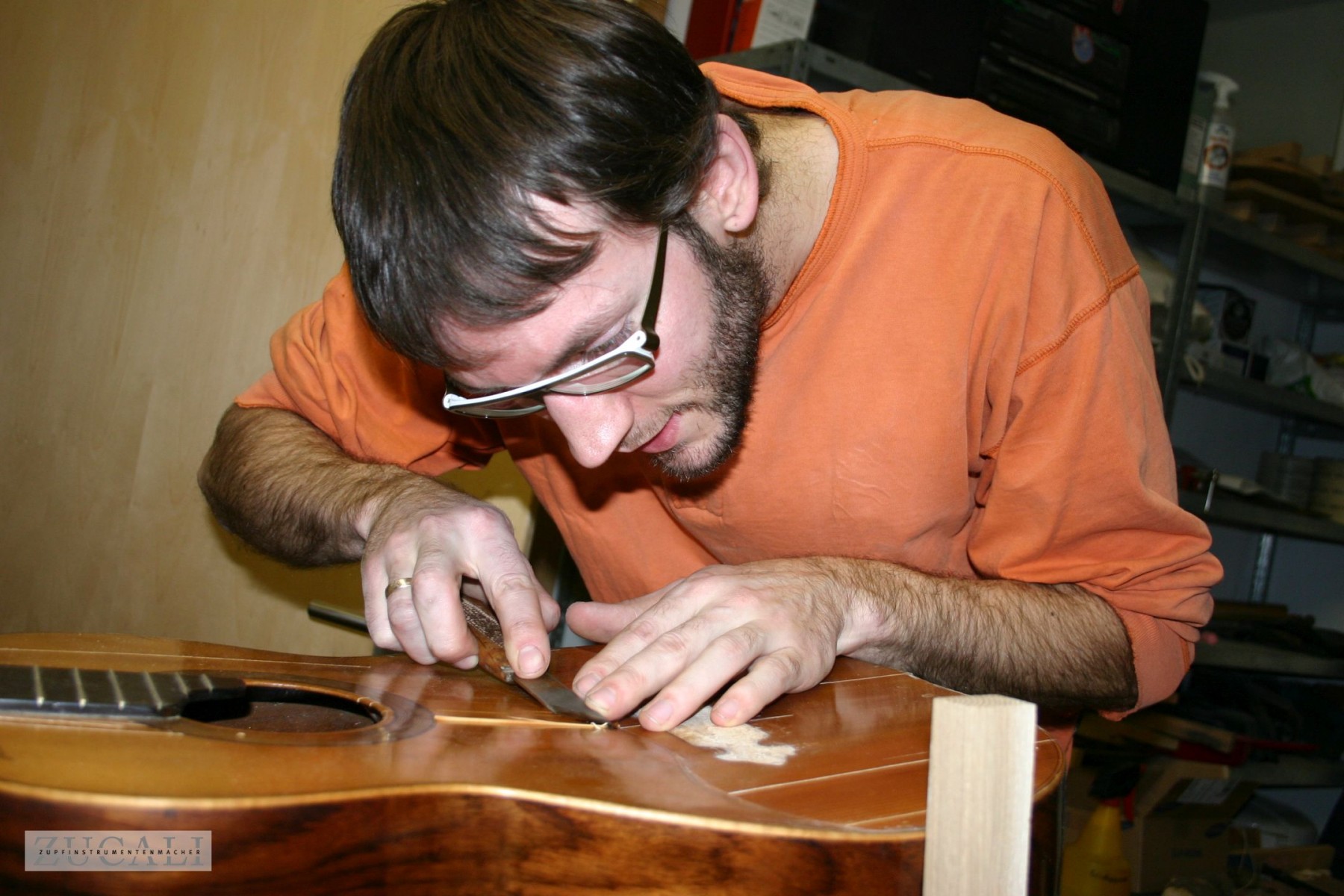
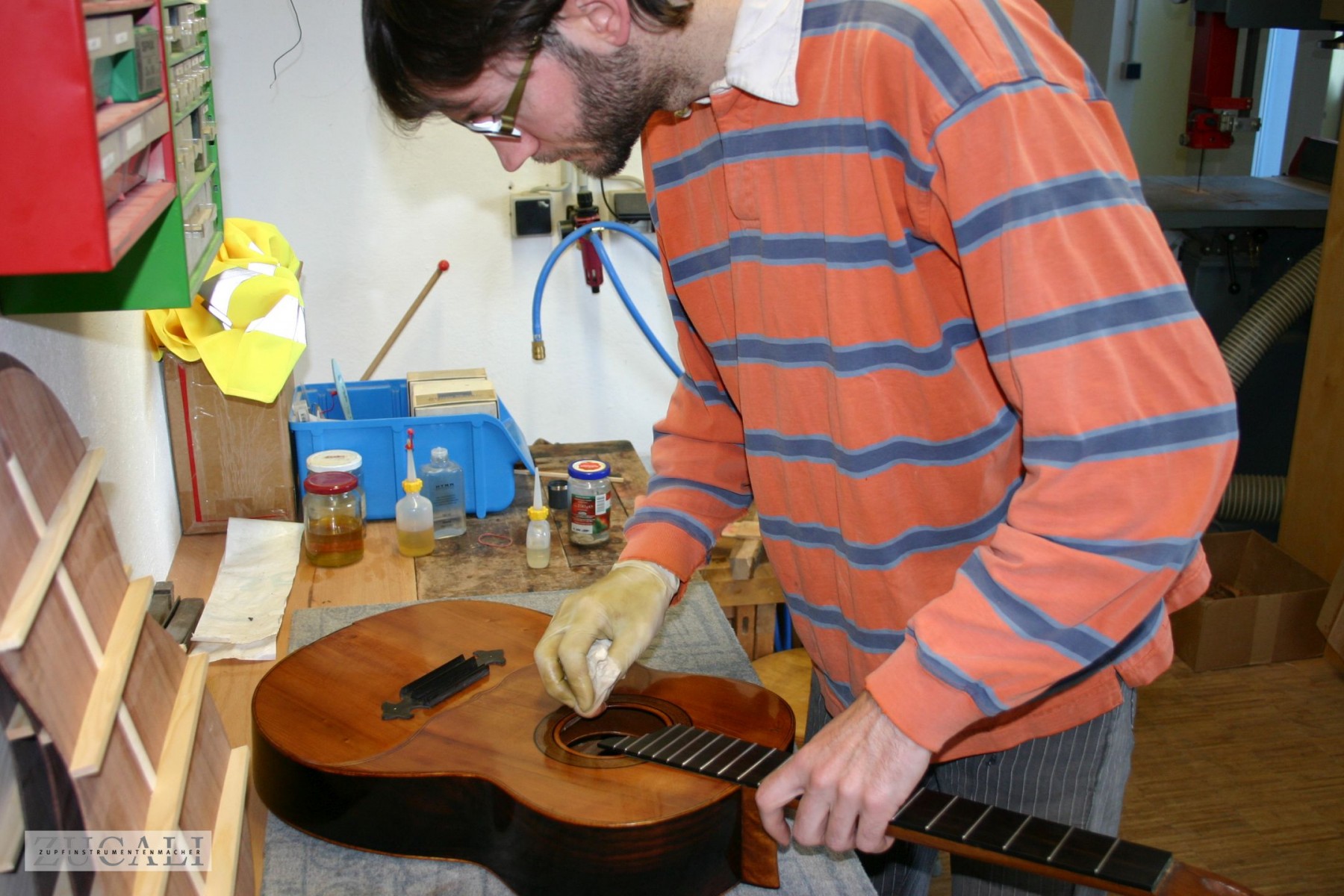
This Reisinger guitar was to be made playable again. Since the instrument has a bolted neck, the decision to build a new one was straightforward. I made the new neck wider than the original and designed it to provide enough spacing between the strings and the edge of the fingerboard. This also allowed for accurate fret placement and proper compensation.
Thanks to the neck screw, the instrument can be easily restored to its original condition with just a few adjustments.
Ludwig Reisinger was born in 1863 in Vienna. After completing his apprenticeship with Ignaz Johann Buchner, he opened his own workshop in 1887. He quickly became one of Vienna’s most renowned guitar makers and soon gained international recognition. The young Hermann Hauser I was strongly inspired by Reisinger’s guitars – clearly visible in Hauser’s well-known “Viennese models.”



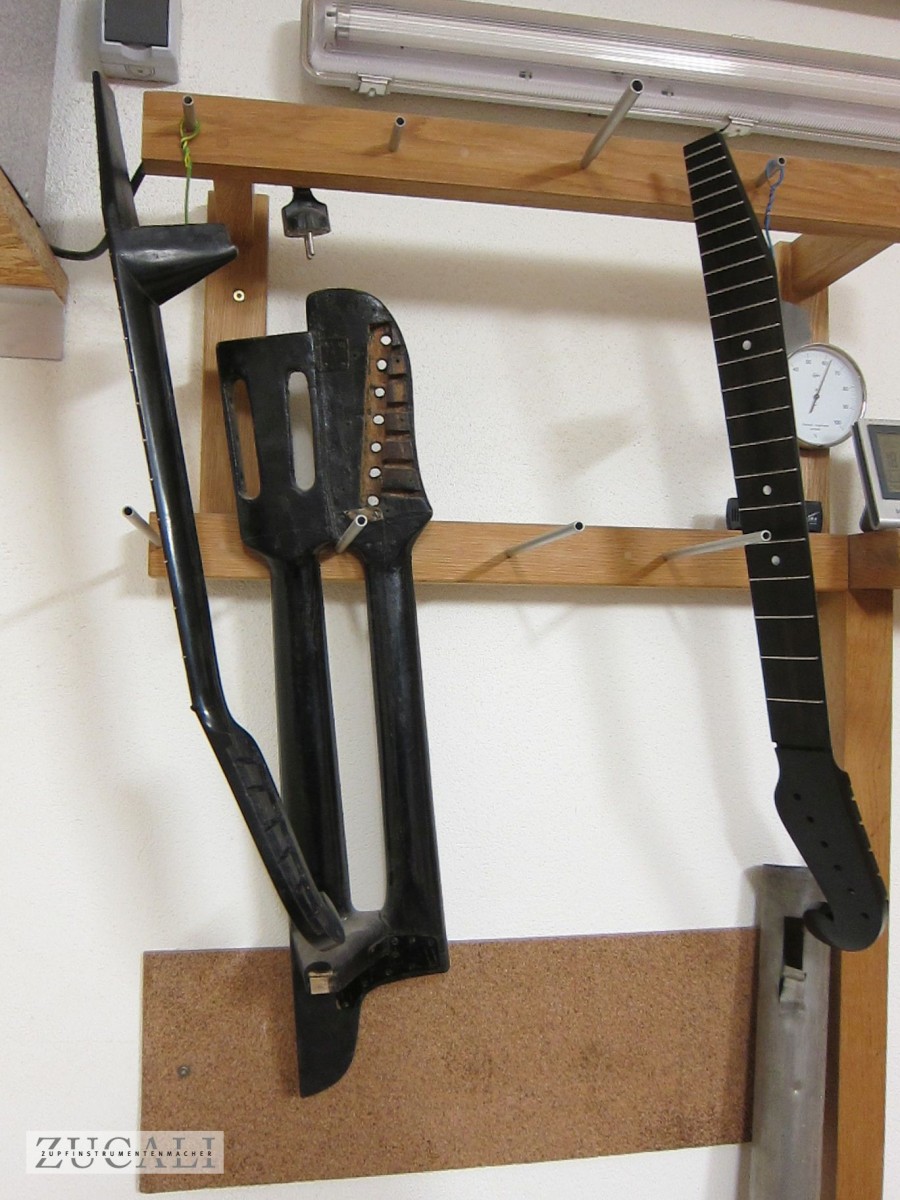
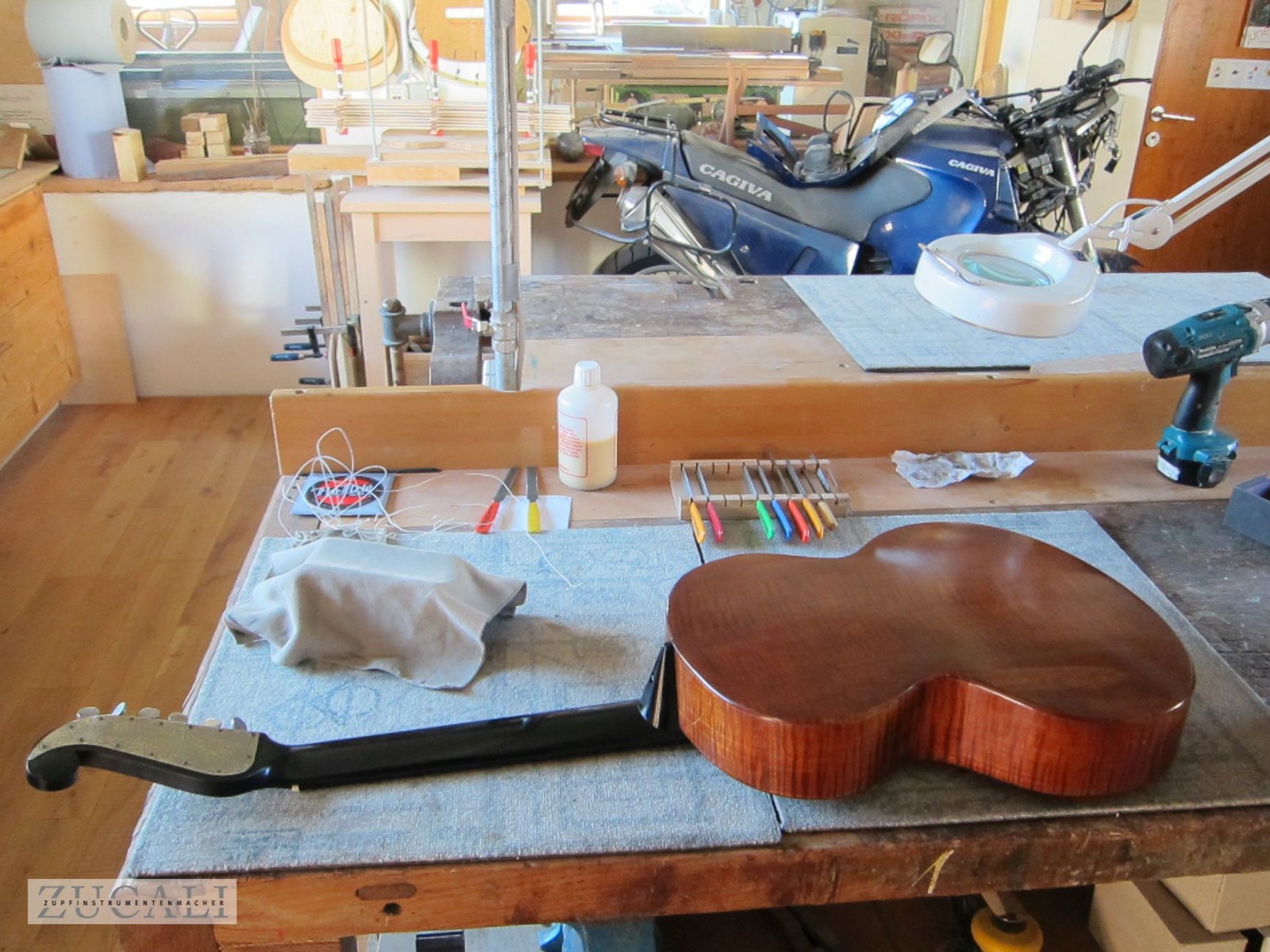

Head replacement
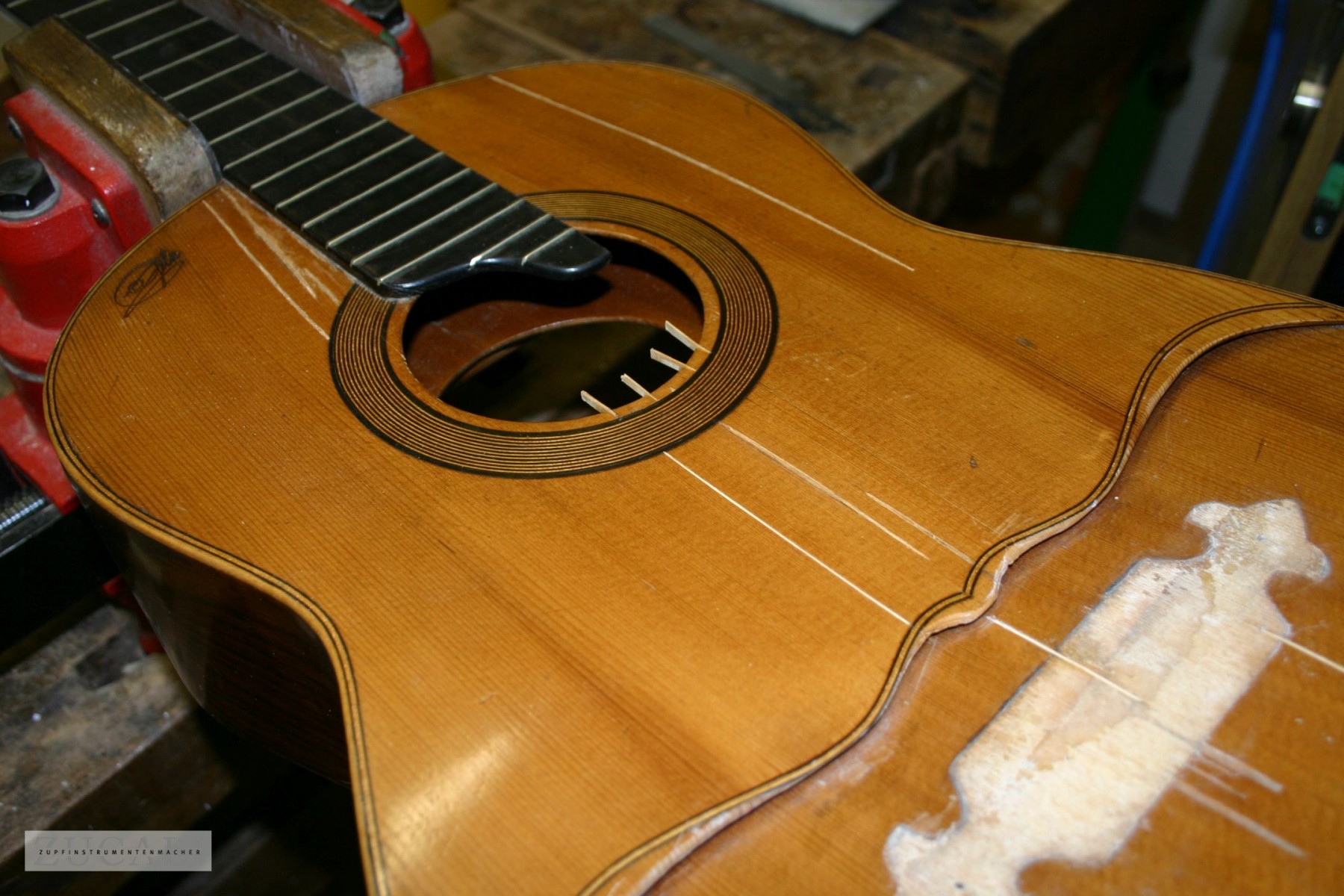
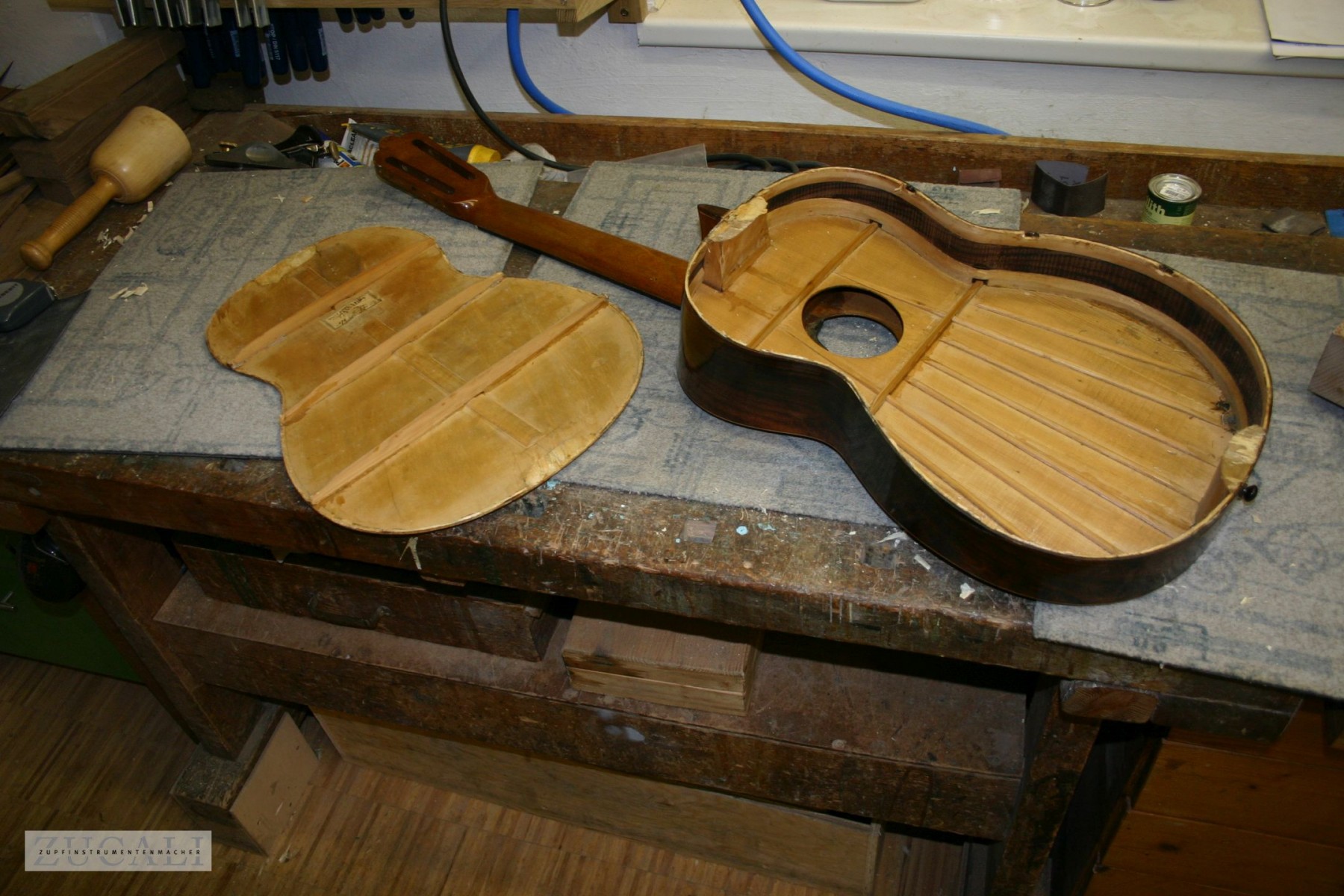
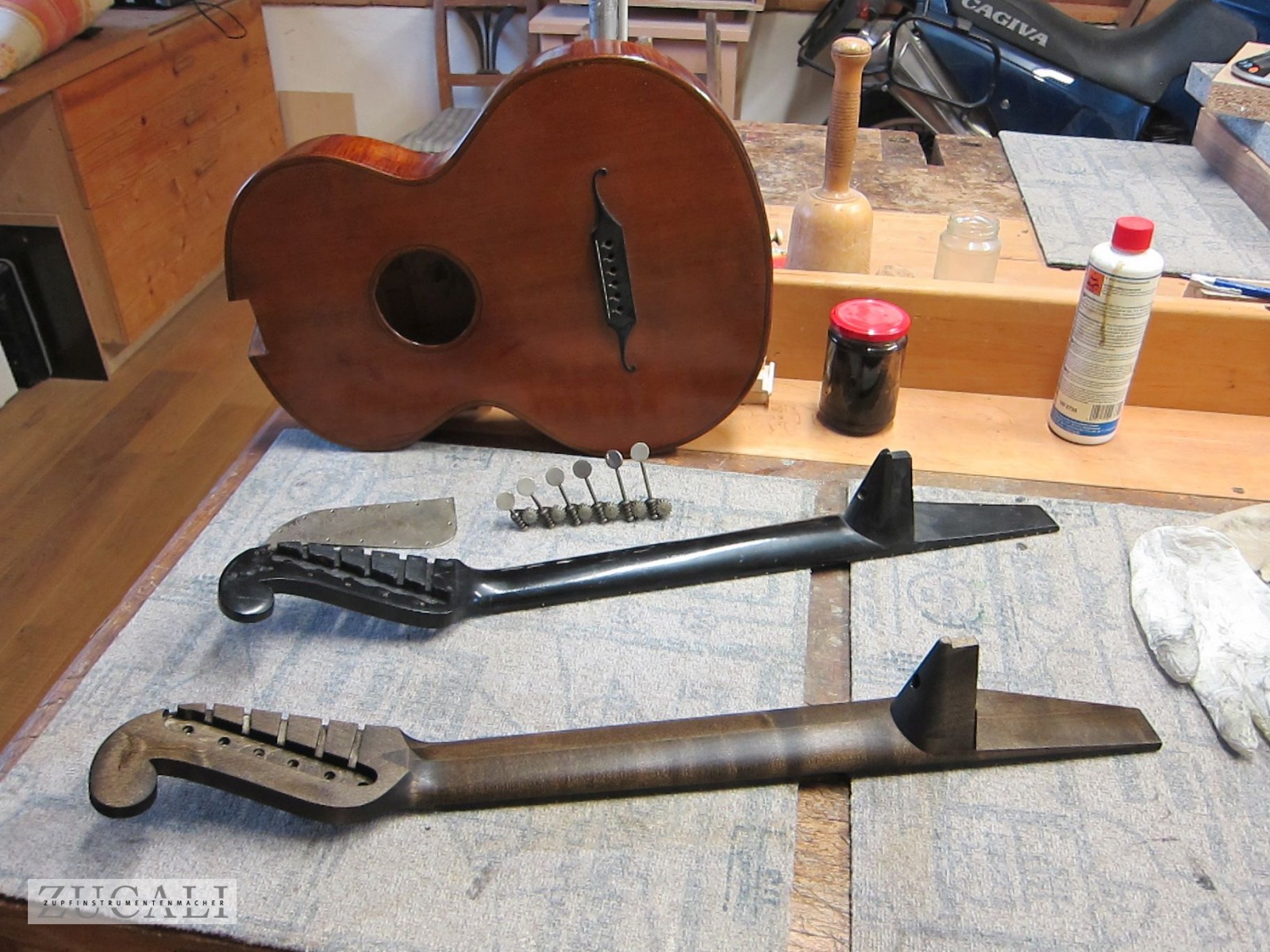
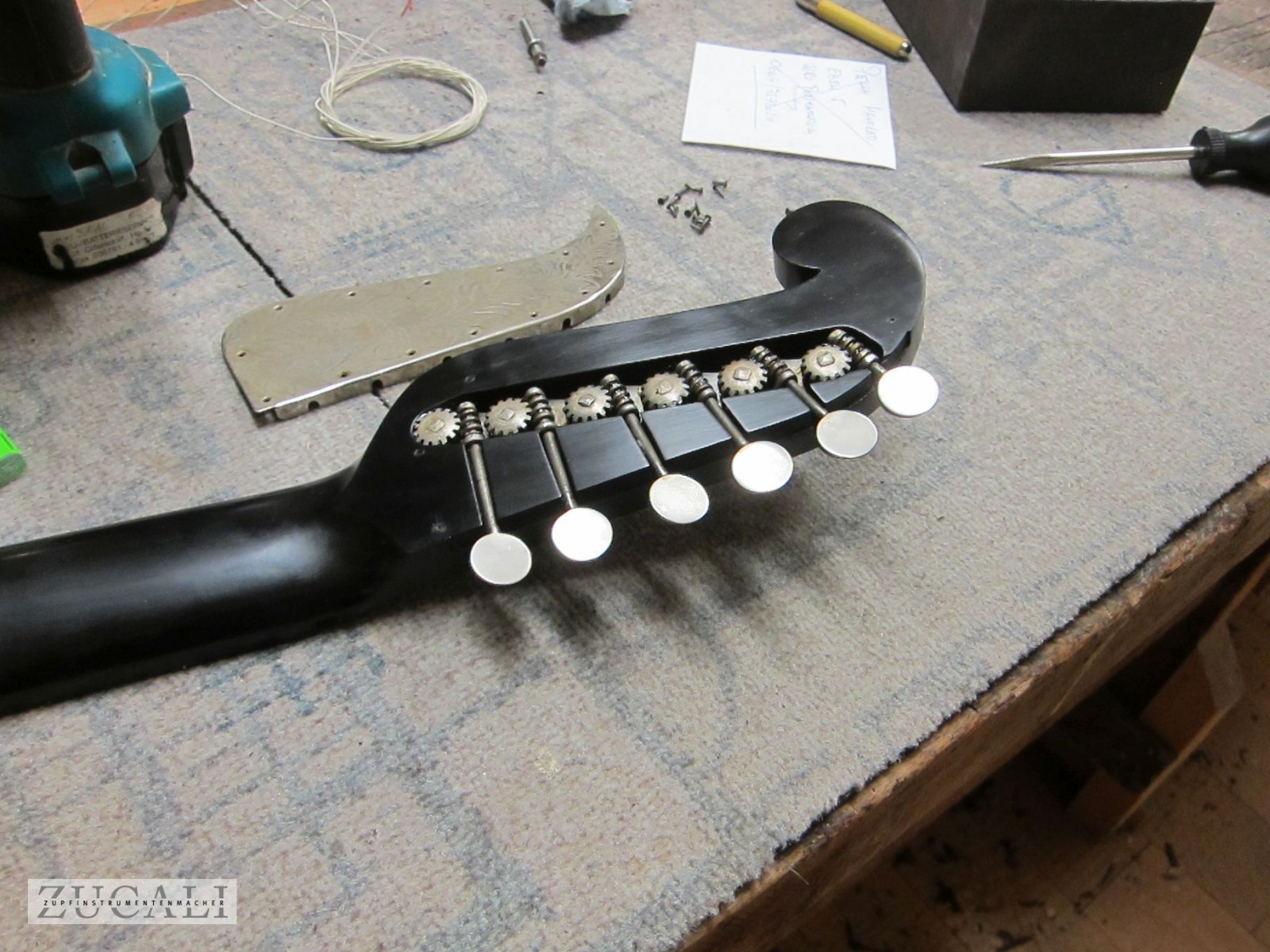
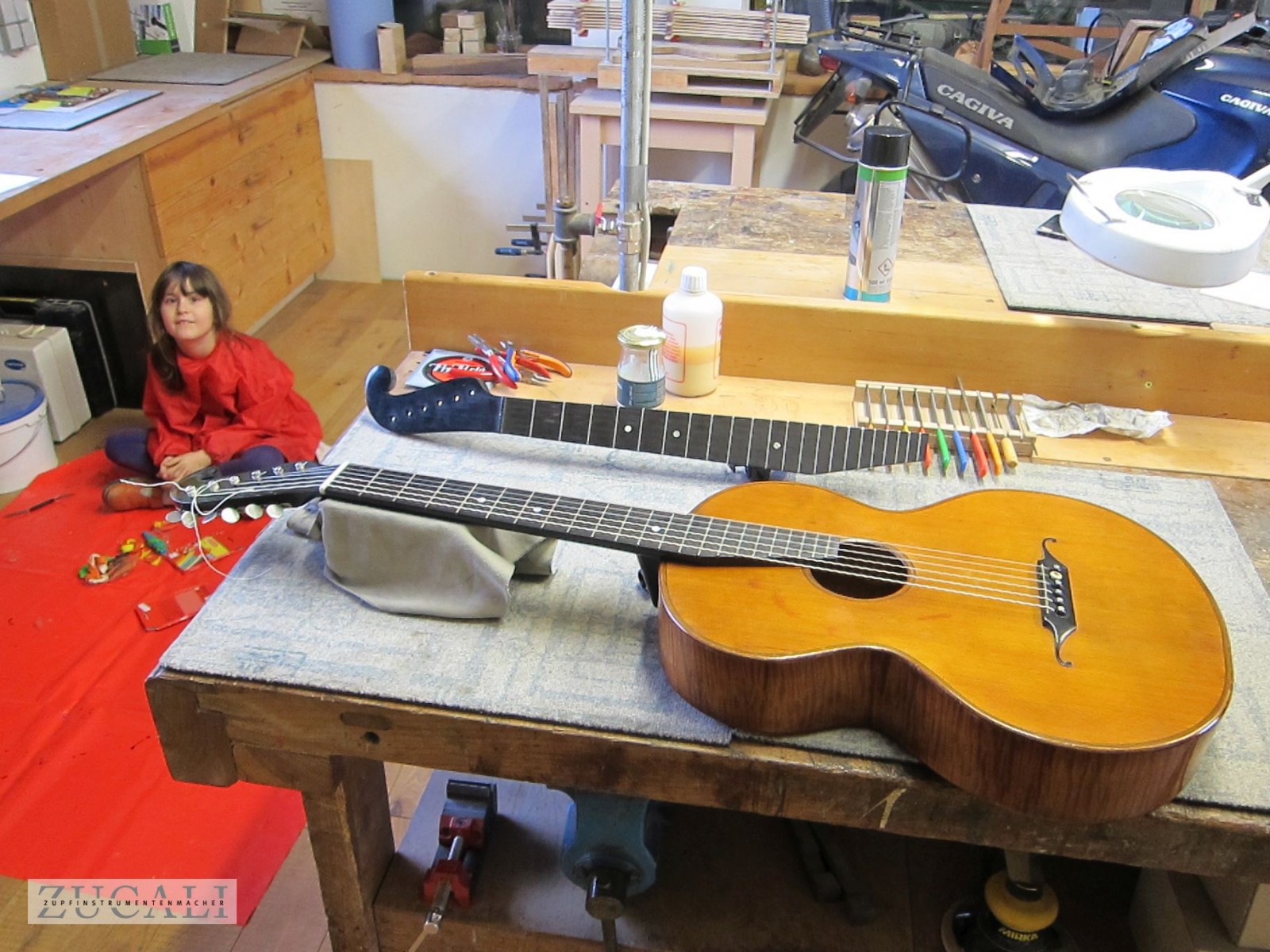
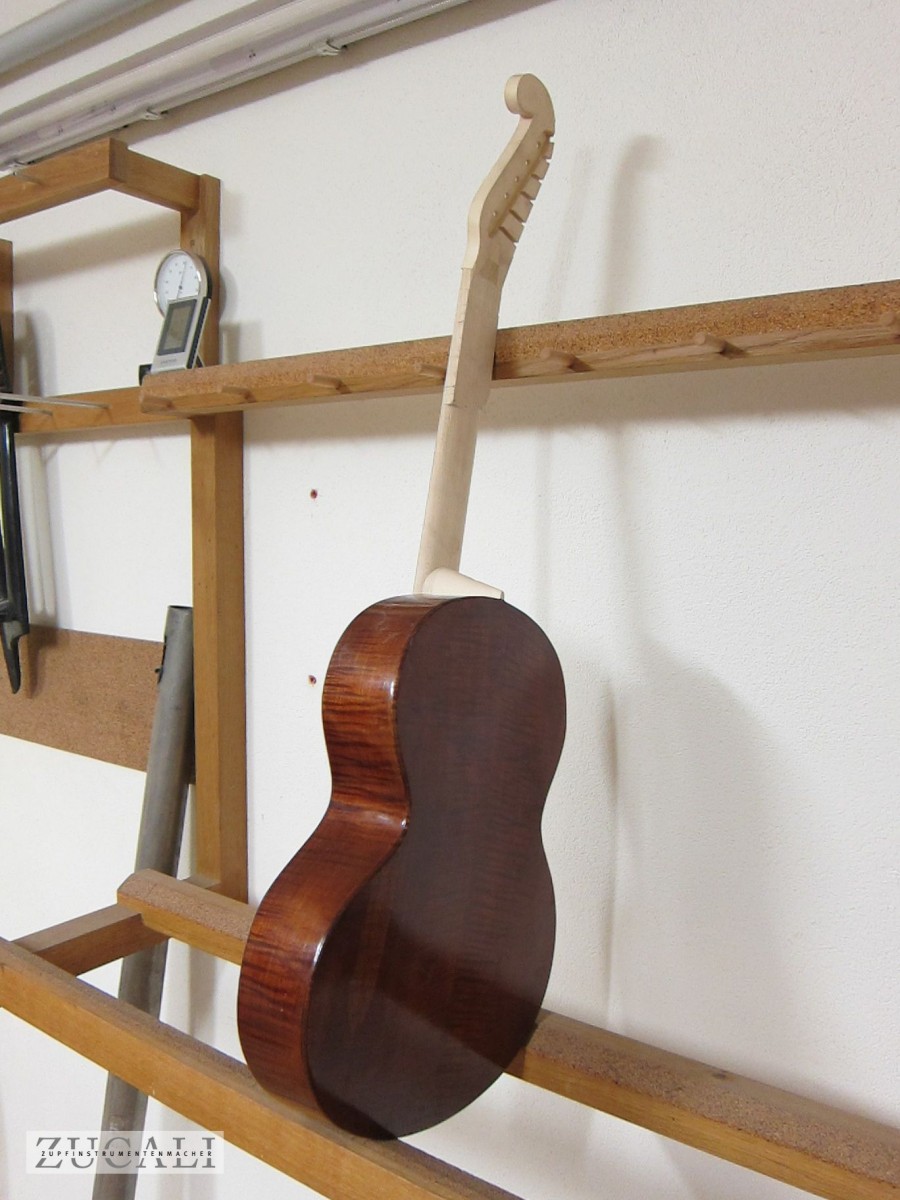
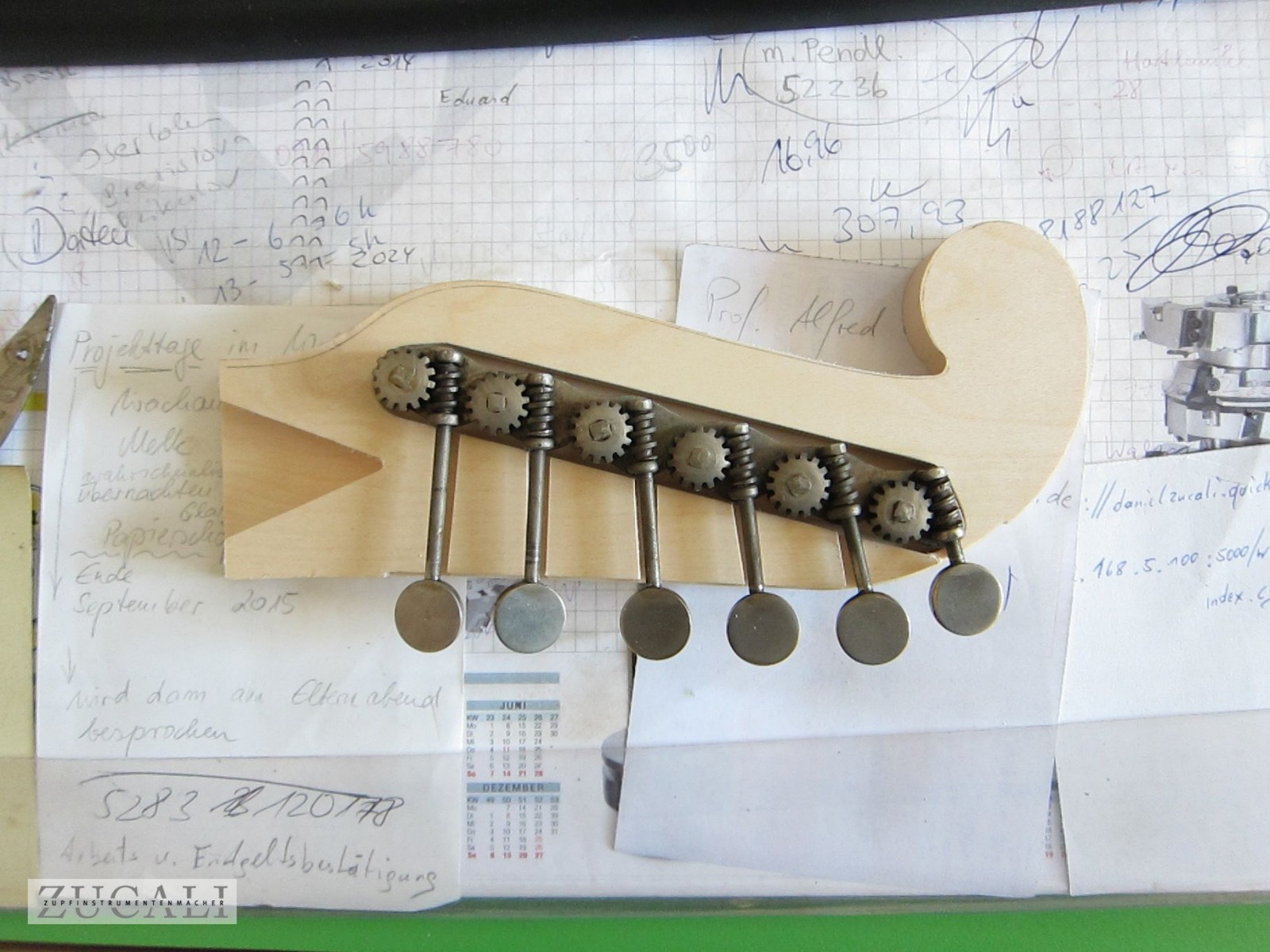
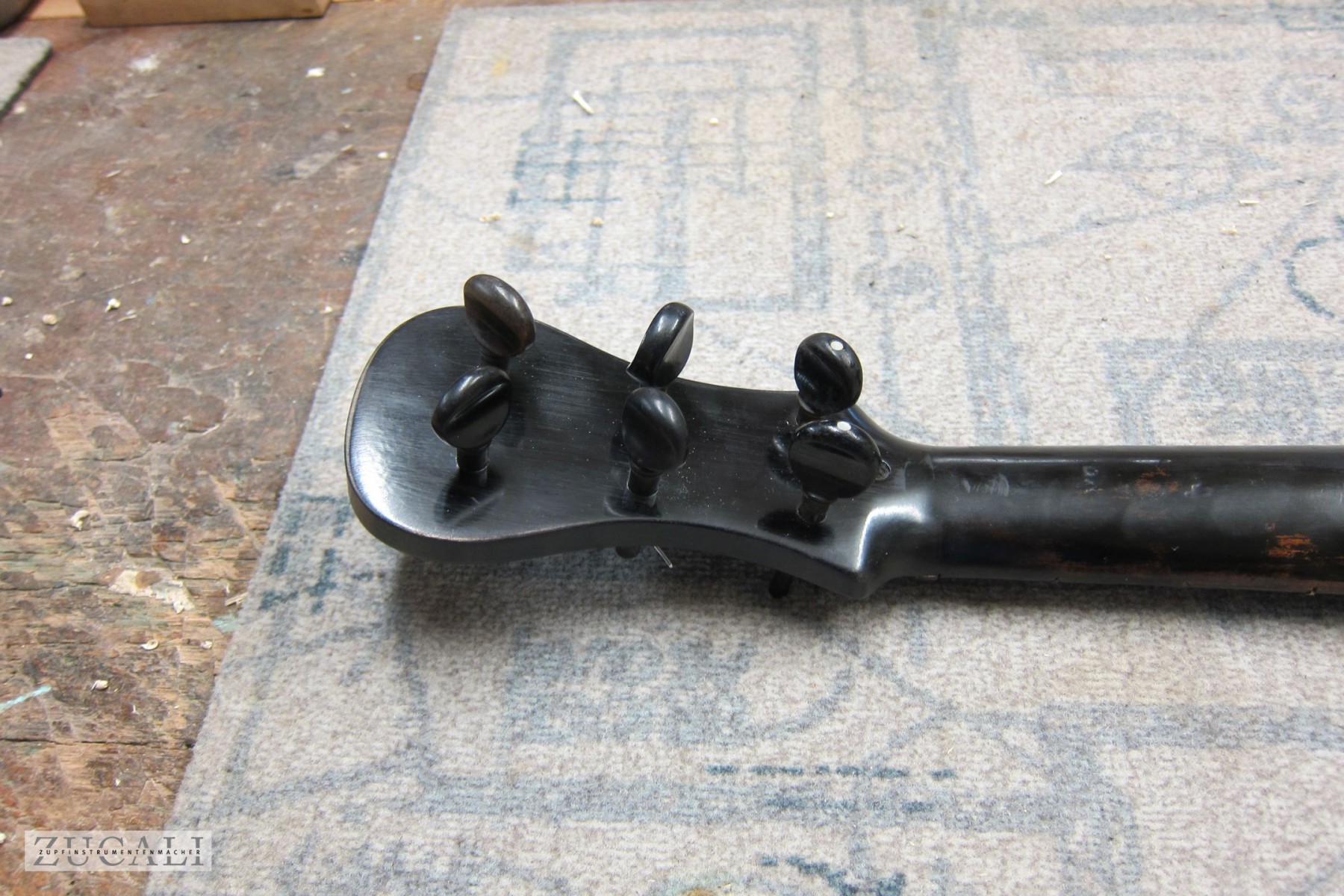
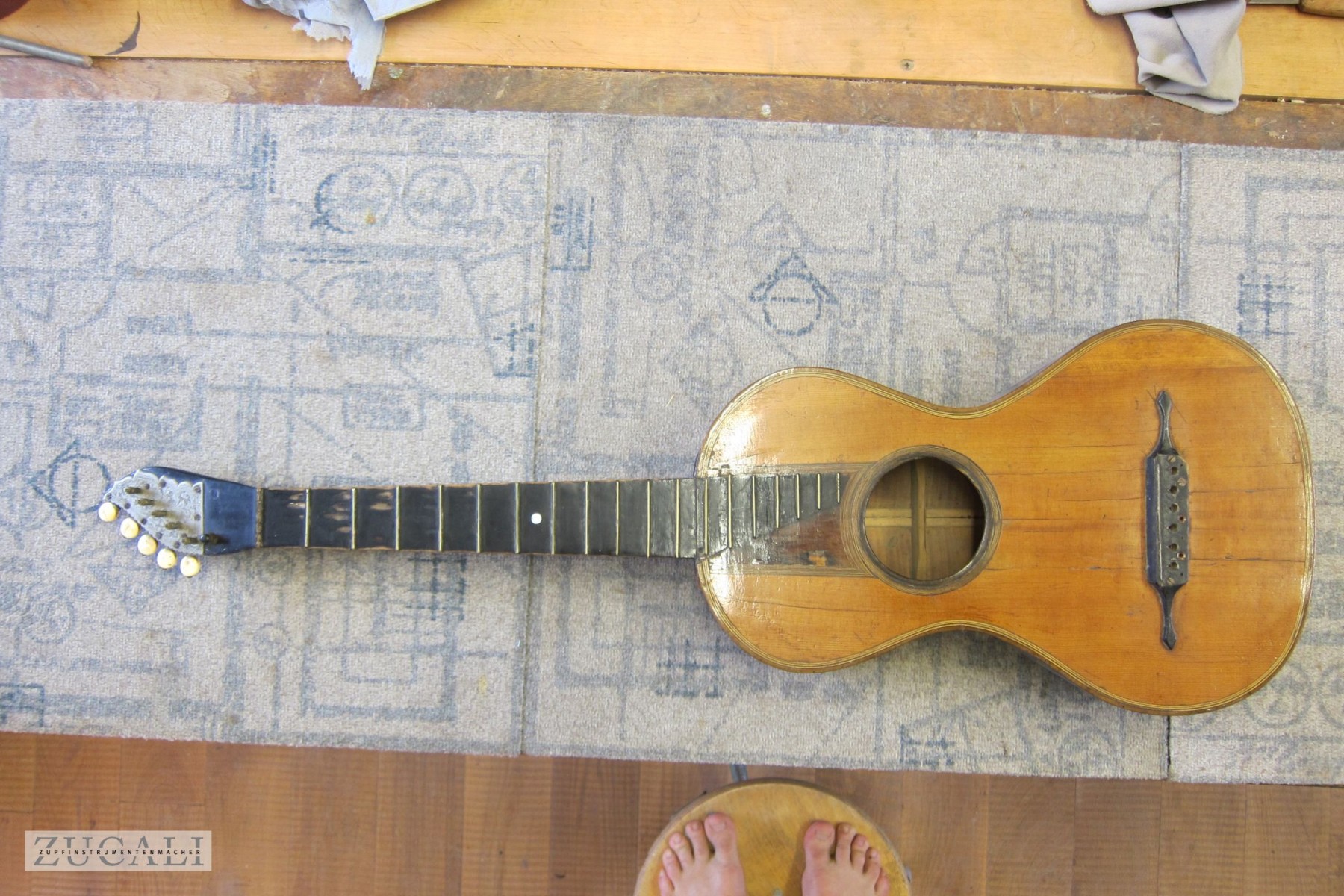
This guitar of unknown origin had suffered in several ways.
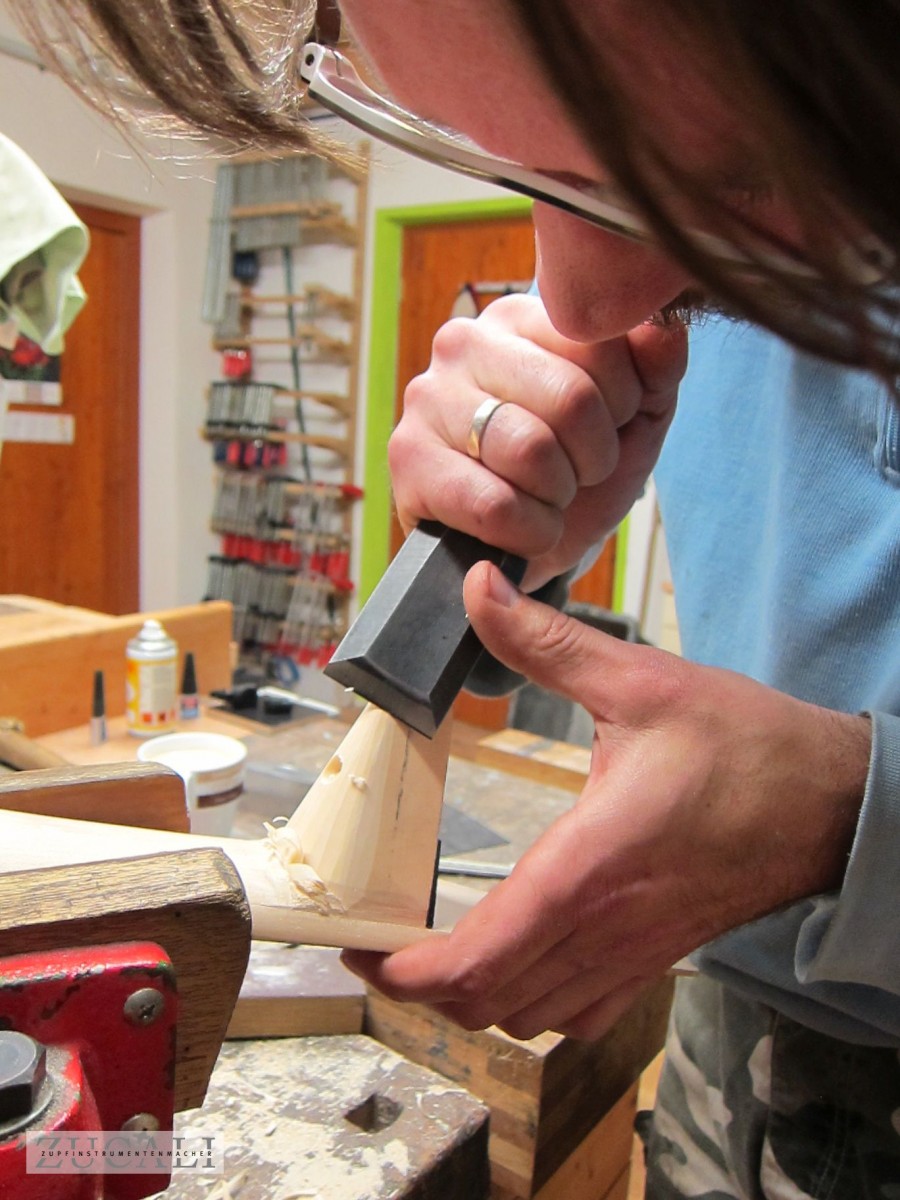
The headstock originally featured wooden pegs that protruded sideways. Since these are, of course, not as convenient to use as machine tuners, the headstock was simply modified to fit a zither mechanism – at least for five strings.
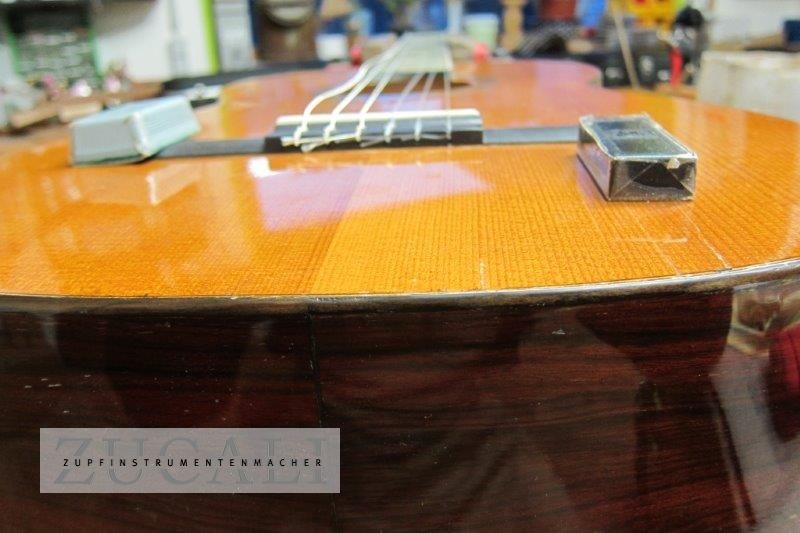
The bridge had also come loose. To “solve” this, a thick block of solid oak was inserted into the guitar and firmly fixed in place using five screws driven through the bridge and the soundboard…


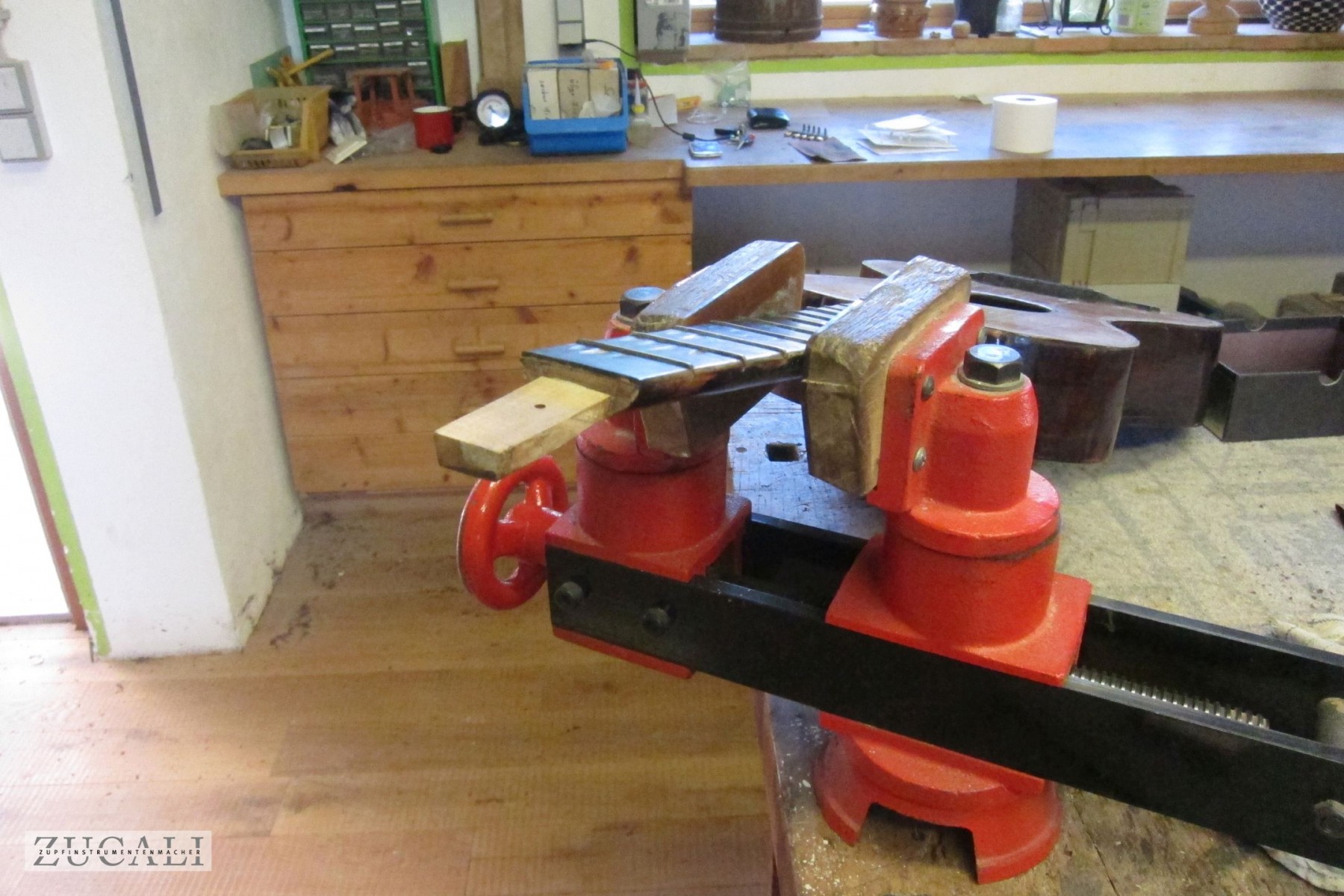

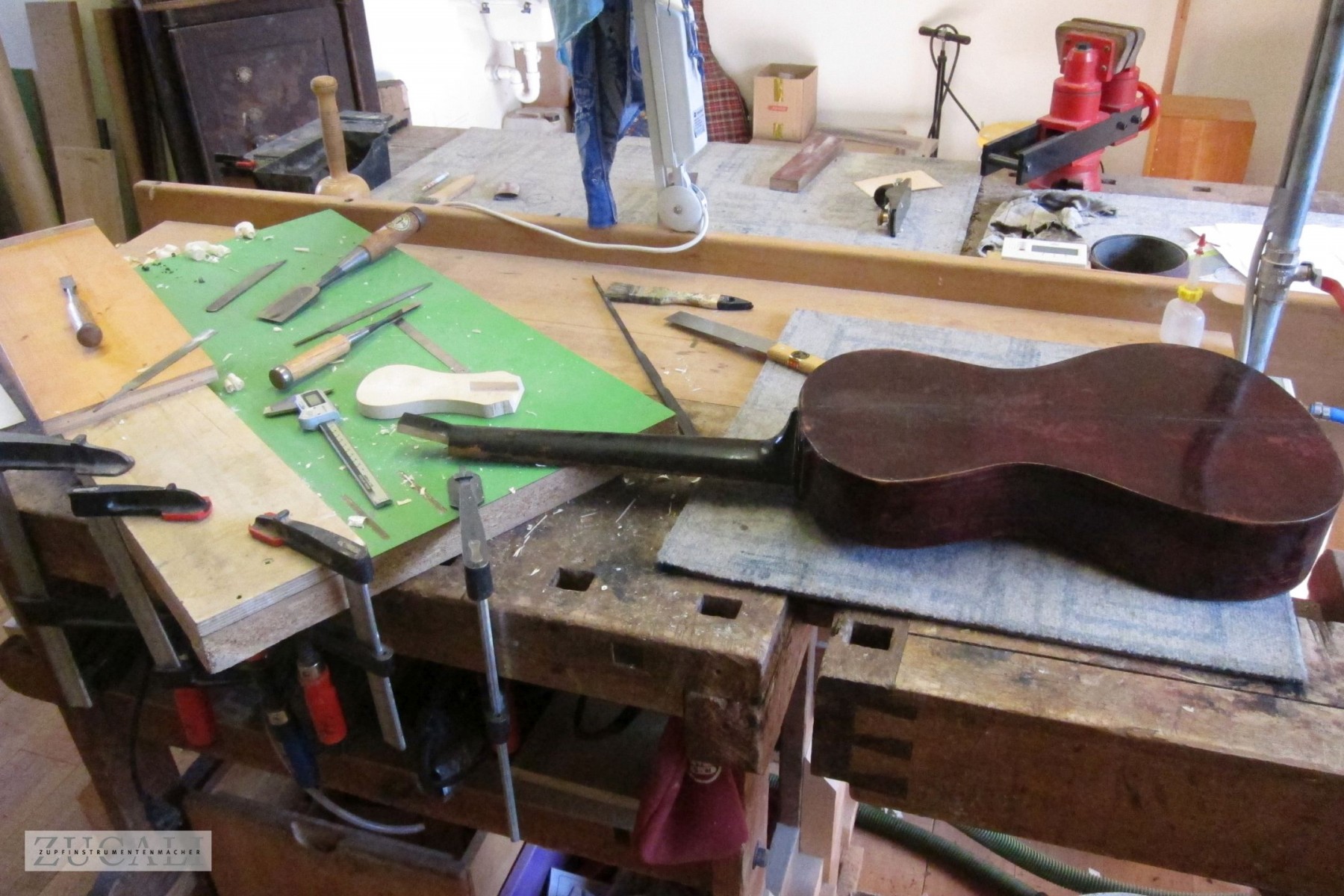


Transport damage
This guitar of unknown origin had been mistreated in several ways.
Originally, the headstock was fitted with wooden tuning pegs. Since these were not as easy to use as mechanical tuners, the head was modified, and a tuning mechanism from a zither was installed – at least for five strings.
In addition, the bridge was loose. To “fix” this, a solid oak block was inserted into the guitar and secured with five screws driven through the bridge and the soundboard.